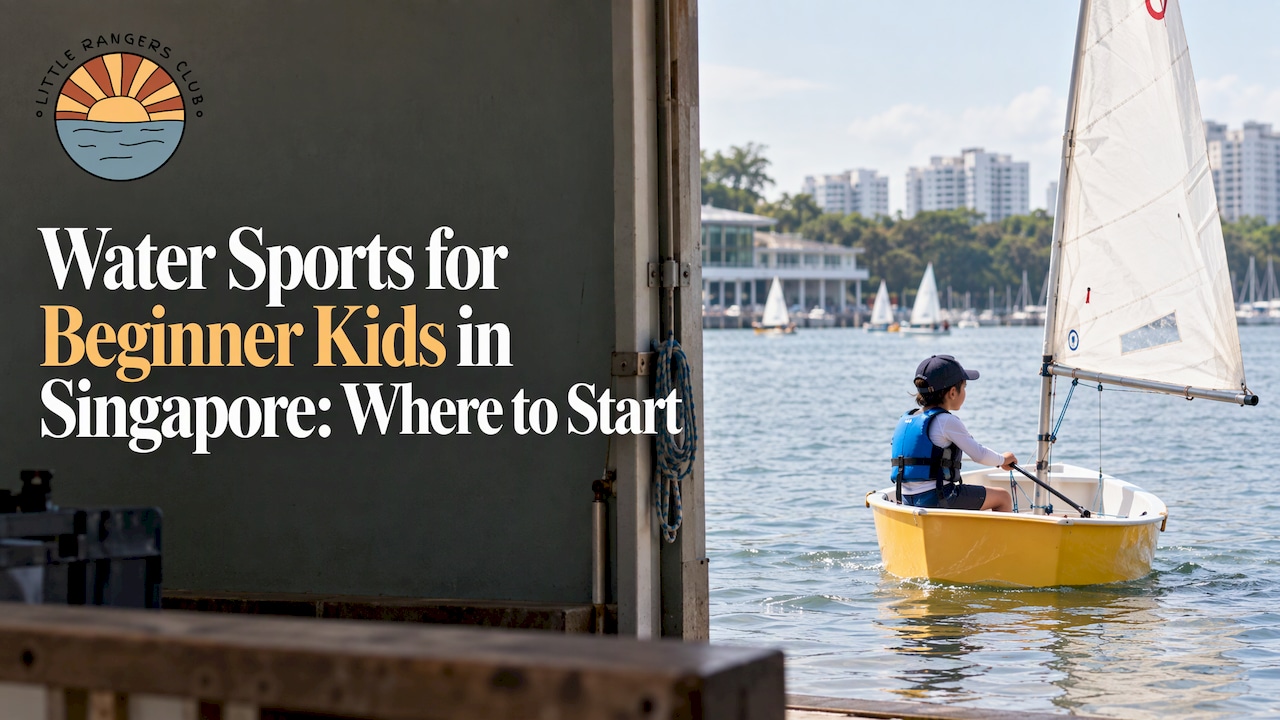
The best first water sport for a beginner child is the one that matches their age, their swimming and their comfort in the water. For most children that means water games and a guided, small-group session before any board or boat. Sailing, kayaking and wing foiling come next, and each has its own age and swimming requirements in Singapore. Our approach at Little Rangers is to build water confidence first and put the child on the equipment second, in sessions run by facilitators, whether that is a pool party with water games or a sailing and wing foil birthday.
This guide explains what each water sport asks of a beginner, which rules apply on Singapore’s reservoirs, what to look for in a first session, and how to prepare your child at home.
Key Takeaways
- Confidence comes before the sport. Children who are comfortable with their face in the water and can follow instructions get far more out of a first session.
- Each sport has real entry rules: sailing starts at age 7, a double kayak at age 5 with an adult for children 12 and under, and wing foiling programmes at age 9.
- A personal flotation device (PFD, a life jacket) is required on pontoons and on the water at Singapore’s paddling venues.
- Beginner activities should be supervised in small groups and open with a safety briefing.
- Pool-based water games and sailing or wing foil experiences can be booked as a birthday party or a camp activity, so your child tries water sports with friends.
Table of Contents
- Which water sports suit beginner kids
- Is your child ready? Age, swimming and confidence
- Safety gear and rules every parent should know
- What a good first session looks like
- Water games to play before the first session
- Choosing between a one-off, a party, a camp and weekly sessions
- Other outdoor options for days off the water
- Our perspective
- Plan your child’s first water adventure with us
- FAQ
- Sources
Which water sports suit beginner kids
Parents often start with a list of exciting sports: jet skis, wakeboarding, parasailing. Most of those are built for older, stronger and more experienced participants. For a beginner child, the realistic starting points are fewer, and the entry rules are clear.
| Activity | Typical starting age in Singapore | What it asks of the child |
|---|---|---|
| Water games in a pool | From the preschool years, with an adult close by for the youngest | Willingness to get wet and follow simple instructions |
| Double sit-on-top kayak | At least 5 (by year of birth), with an adult for children 12 and under | PFD, basic swimming skills, size-compatible equipment |
| Sailing (Optimist dinghy) | 7 to 12 | Under 45 kg and 150 cm, and a 50 m swim wearing a PFD |
| Wing foiling | 9 and up in the national programme | Water confidence, strong swimming, instruction |
| Closed-deck kayak or canoe | Older children and teens | SCF Kayak 1 Star certification |
The figures above come from two Singapore bodies. The Singapore Sailing Federation’s ActiveSailing programme is designed for ages 7 to 12 on the Optimist course (minimum age 7, under 45 kg and 150 cm), and every participant must swim 50 metres wearing a PFD. Its ILCA Basic Sailing Course is for ages 13 and up, and the BraveSails wingfoiling programme is for Singaporeans aged 9 and up. The Singapore Canoe Federation’s Paddling Code of Practice 2026 sets the kayak rules.
Water games and pool play
For the youngest beginners, the first water “sport” is play: blowing bubbles, kicking, floating, chasing a friend in shallow water. These games teach breath control, balance and trust in the water, the same things a later sailing or paddling lesson depends on. They also suit children who are nervous, because the stakes are low and the goal is fun.
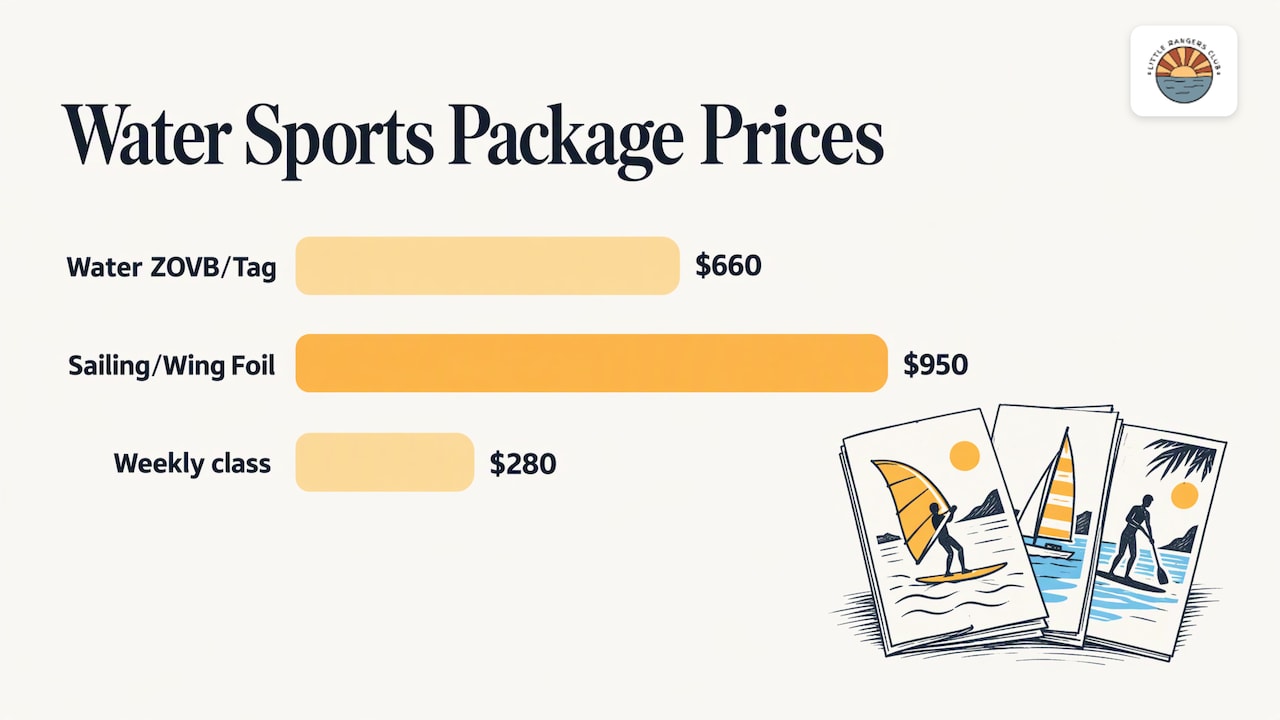
We use this idea in our Water ZOVB and Water Tag Pool Party, at $660. It puts a group of friends in a water-games format with professional facilitation, so a child’s first structured water experience happens among familiar faces. You can see the full list on our parties and events page.
Kayaking
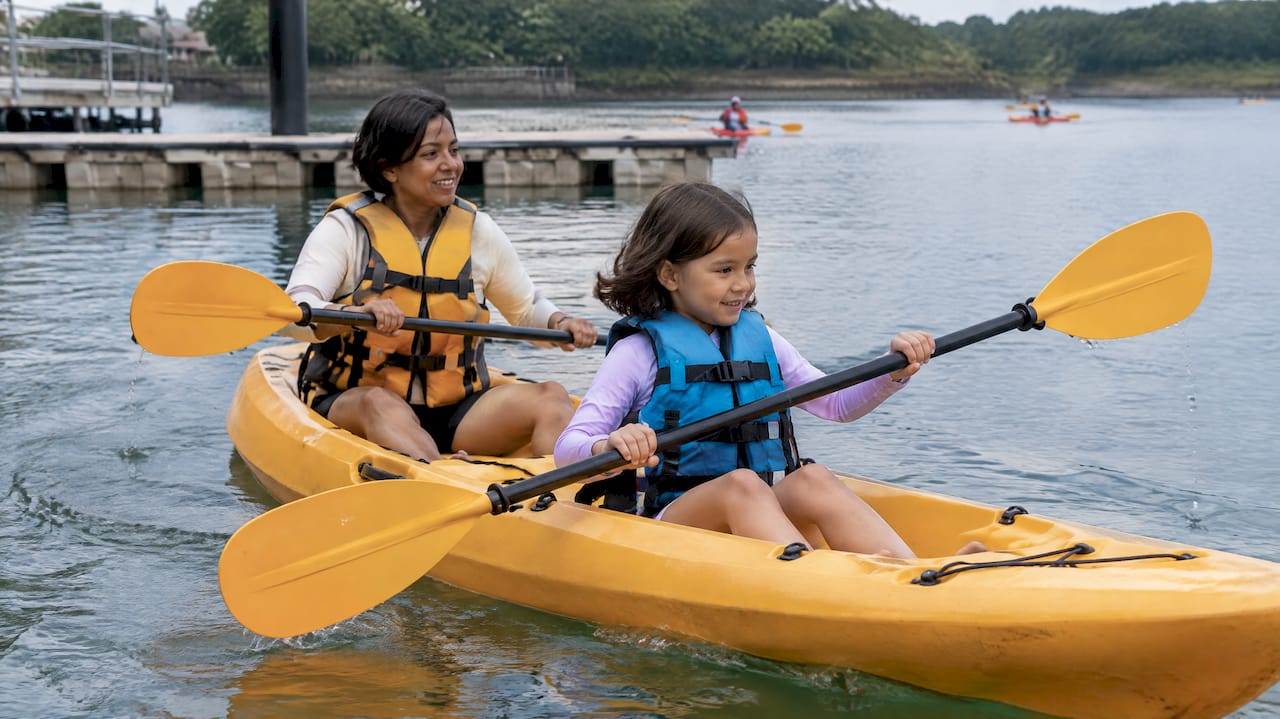
Kayaking is a gentle first sport, but Singapore’s rules are specific. According to the SCF Code, in a double sit-on-top kayak children must be at least 5 years old (by year of birth), use weight- and size-compatible equipment and approved PFDs, and anyone aged 12 and below must be accompanied by an adult at all times. Sit-on-top and double sit-on-top kayaks require SwimSafer 2.0 Stage 1 or basic swimming skills under Singapore Standard SS701:2023, while closed-deck kayaks and canoes require SCF Kayak 1 Star certification.
Sailing
Sailing suits children who like a mix of thinking and moving. The Optimist is a small single-person dinghy designed for young sailors, and the national programme starts at 7. Beginners learn to rig the boat, steer, read the wind and recover from a capsize, all of which build problem-solving and resilience. Our Sailing & Wing Foil Birthday Party, at $950, brings these two water sports into a celebration for children who want something more adventurous than a function room.
Wing foiling
Wing foiling uses a hand-held wing and a board with a hydrofoil beneath it. In the national programme it is open to Singaporeans from age 9. Because it asks for good swimming and comfort when falling in, it is a second step for most children, after they have enjoyed simpler time on the water.
Is your child ready? Age, swimming and confidence
There is no single age at which a child is ready. The American Academy of Pediatrics says swim lessons can begin for many children from age 1, that most are ready by their fourth birthday to learn water-survival skills such as treading water and getting to an exit point, and that children under 4 need touch supervision, meaning an adult within arm’s reach. It advises looking at a child’s emotional maturity, physical development and comfort in the water, and choosing programmes that teach water-survival skills.
In practice, ask yourself four questions:
- Does your child enjoy getting their face wet? If not, spend time on water play before any equipment.
- Can they follow a two-step instruction from someone other than you, such as “hold the paddle here, then push”?
- Can they move in the water on their own and get back to the edge or a floating object?
- How do they react when something goes wrong, such as a splash in the face or a wobble?
Singapore’s official swimming framework gives a useful yardstick. SwimSafer 2.0 is a progressive six-stage programme. Stage 1, “Introduction to Water Skills”, aims to build confidence and independence in the water and covers general and deep-end water safety, moving forwards and backwards, safe entry and exit, and personal water safety. The SCF Code ties kayaking to this level: participation is competency-based, paddlers need basic swimming skills and adequate water confidence, and weak swimmers must be identified and given additional safety controls.
For a longer read on building comfort step by step, see our parent’s guide to water confidence for kids.
Safety gear and rules every parent should know
Water sports for beginners should always follow the same safety pattern: a flotation device, a briefing, and a small enough group that every child is seen.
Personal flotation devices
The SCF Code requires approved PFDs meeting ISO 12402-5, CE, EN, USCG or equivalent standards, worn on pontoons and on the water. A PFD should fit the child’s weight and size. A device that rides up over the ears or slips off at the shoulders is not doing its job, so check the fit before getting in, and fasten every strap.
Supervision and briefings
For beginners the SCF Code says supervision must not exceed a ratio of 1:10, and organised activities require a safety briefing. A good briefing for children is short and concrete: where the boundaries are, what the whistle or signal means, what to do if you fall in, and who to look for.
Rules at Singapore reservoirs
If your family plans to paddle outdoors, two sets of rules apply. The SCF Code lists authorised inland paddling locations, including Bedok, MacRitchie, Marina and Pandan Reservoirs, with activities only in designated PUB zones between 0700 and 1900. PUB’s Marina Reservoir guidelines require an approved PFD at all times, including on the pontoon, bright clothing whenever possible, and covered footwear. Paddling there needs at least a 1-Star Kayaking Award, unless you use a rental sit-on-top kayak from a water-activities operator. The 1-Star level is limited to the non-motorised zone and Kallang Basin up to Tanjong Rhu Suspension Bridge and Benjamin Sheares Bridge.
Rules are updated from time to time, so check the current PUB and SCF documents before you go.
What to pack
Beyond the PFD, a beginner needs sun protection, a rash guard or swim top, covered footwear for pontoons, a towel, water and a change of clothes. For a broader overview of beginner gear, this guide to beginner water sports activities, safety and gear is a handy checklist to run through before the day.
What a good first session looks like
A beginner session should feel like a staircase, not a deep end. Look for this order:
- Welcome and briefing. The instructor explains the rules in words your child understands.
- Gradual entry. Children get in at their own pace, with the PFD on and checked.
- Comfort play. Splashing, floating and simple games, so everyone settles.
- A small skill. Holding a paddle, steering a boat, or balancing on a board, taught one step at a time.
- Feedback. The child hears what went well and what to try next.
The same order works whether the first session is a pool party, a kayak outing or a sailing morning. Children who are slow to warm up should never be rushed through step 2. A facilitator who watches each child, rather than the clock, makes the difference between a child who wants to come back and one who refuses to get wet again.
Water games to play before the first session
You can prepare a child at a pool or even in the bath. Keep sessions short and light, and keep within arm’s reach of any child under 4, as the AAP advises.
- Bubble blowing. Blow bubbles on the surface, then with the mouth just under. It teaches breath control.
- Treasure dive. Place a small, soft toy in shallow water and have the child fetch it. It builds comfort with their face in the water.
- Red light, green light. Kick on “green” and freeze on “red”. It teaches kicking and stopping on command, a skill every group lesson relies on.
- Starfish float. Lie back and spread arms and legs while you support them. It builds trust and the beginnings of back floating.
Celebrate small wins and stop when the child is still having fun. Children who finish on a high ask to go back.
Choosing between a one-off, a party, a camp and weekly sessions
How your child meets water sports depends on what you want from the experience.
- A birthday party. Works well when your child is already keen and you want friends to share the first try. Our Water ZOVB and Water Tag Pool Party is $660, and our Sailing & Wing Foil Birthday Party is $950. For other ideas, browse our kids birthday party packages.
- A holiday camp. A camp is a good fit when you want several new activities in one week, so water sits alongside outdoor adventure and other skills. See our holiday camps.
- Weekly classes. Regular sessions let a child practise movement skills and teamwork week after week. Our 10 Sessions Weekly Class Package is $280, details on the club activities page.
- Private classes. If your child needs more personal attention, we offer exclusive private classes.
Schools and kindergartens can also plan outdoor and adventure activities for year-end events and field days. Our school programmes and partnerships page is the place to start.
If you are still weighing outdoor options in general, our guide to outdoor activities for kids in Singapore covers more, and our overview of adventure education for children explains why they build life skills.
Other outdoor options for days off the water
Water sports depend on weather and your child’s mood. On other days, NParks lists a range of park activities including nature walks, bird watching, kite flying, cycling and sandcastle building. HealthHub’s weekend ideas for children include sandcastle building at East Coast Park and the flat Chemperai Trail at MacRitchie Reservoir. These keep your child active and comfortable outdoors, which carries over to water days.
Our perspective
We believe the first water experience should be about confidence, not performance. A child who finishes a session proud and wanting more will learn faster than one pushed to keep up.
That is why we build water activities into a wider adventure programme. Teamwork, resilience and problem-solving are life skills, and a pool game, a sailing morning or a wing foil trial gives children a chance to practise them in a setting they find exciting.
We run indoor and outdoor programmes for children aged 3 to 13, and our facilitators plan each activity around safety and quality instruction. Our mobile birthday packages come to your home or a local venue, so children try something new close to home and among friends.
If you are unsure where your child should start, begin with games and a guided session, and move up as they grow in confidence.
Joshua
Plan your child’s first water adventure with us
If your child is ready to try the water with friends, our Water ZOVB and Water Tag Pool Party is $660 and our Sailing & Wing Foil Birthday Party is $950. Both are led by professional facilitators and designed for children to enjoy something new while building confidence and teamwork. For camps and weekly classes, see the full range on our site.
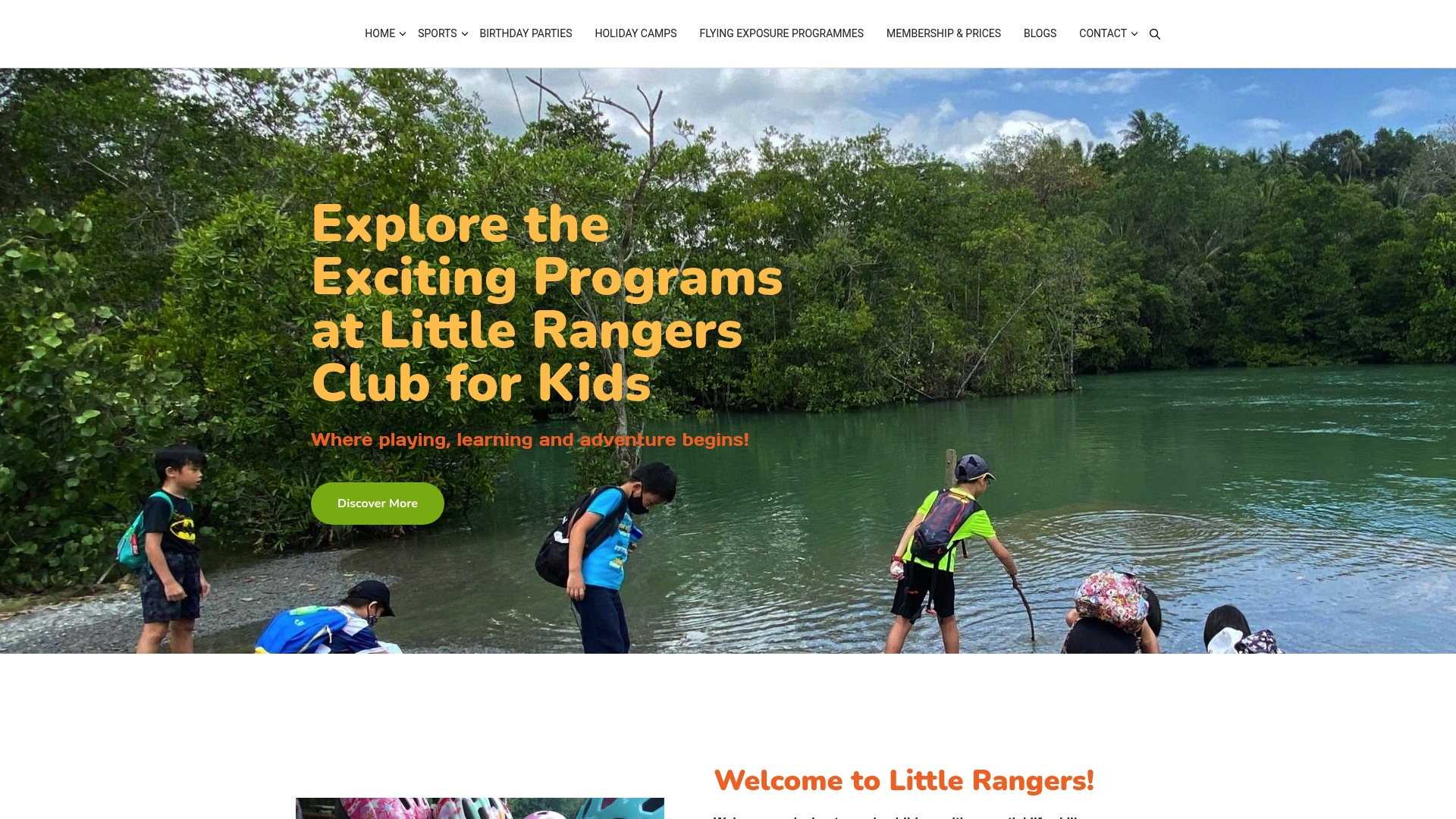
Browse the parties and events page to choose a package, or visit Little Rangers Club to see all our programmes for ages 3 to 13.
FAQ
What is the best water sport for a beginner child in Singapore?
For most young beginners, pool-based water games are the best start, followed by a double sit-on-top kayak with an adult or a guided sailing session. Sailing in the national programme starts at age 7, and a double kayak at age 5 by year of birth. The right choice depends on your child’s swimming and comfort in the water.
Does my child need to know how to swim first?
For most organised water sports, yes, at least at a basic level. The SCF Code asks for basic swimming skills and water confidence, and sit-on-top kayaks require SwimSafer 2.0 Stage 1 or basic swimming skills. National sailing courses require a 50 m swim wearing a PFD.
Do children have to wear a life jacket?
Yes. The SCF Code requires approved PFDs on pontoons and on the water, and PUB requires one at all times at Marina Reservoir, including on the pontoon. Choose one that fits your child’s weight and size and fasten every strap.
How young can a child start water games?
Many children can begin swim lessons from age 1, according to the American Academy of Pediatrics, with an adult within arm’s reach for children under 4. Most children are ready to learn water-survival skills by their fourth birthday.
Can water sports be part of a birthday party?
Yes. We offer a Water ZOVB and Water Tag Pool Party at $660 and a Sailing & Wing Foil Birthday Party at $950, both on our parties and events page.
Sources
- ActiveSailing FAQs, Singapore Sailing Federation
- SCF Paddling Code of Practice 2026
- Swim Lessons for Children: When to Start & What to Consider, HealthyChildren.org (AAP)
- SwimSafer 2.0 Instructors Manual Block Plan, ActiveSG
- Safety Guidelines for Use of Reservoir for Water Activities, PUB
- Activities, NParks
- Outdoor Activities for Your Children, HealthHub
- Water Sports for Beginners: Activities, Safety, and Gear