The best school field trips in Singapore pair one clear learning goal with a place where children can touch, walk, build or move. Good options include NParks guided walks, heritage trails, museum workshops, water-focused learning trails and outdoor adventure sessions. Choose by age group, book early, and check group ratios and safety before you commit. This guide covers what to do, what it costs, and how to plan it.
Key Takeaways
- Start with a learning objective, then pick the destination. MOE’s early learning guidance says engaging trips have clear objectives, sensory experiences and active participation.
- Singapore has strong public options: NParks guided walks (from $7 per pupil for 5 to 9 year olds), NHB museums and heritage trails, and PUB’s ABC Waters learning trails.
- Booking takes lead time. Children’s Museum Singapore asks schools to book at least 42 days ahead, with late-change fees.
- Active, team-based outdoor sessions build teamwork and resilience in ways a walk-through visit cannot. We run these for schools.
- Check facilitator ratios, a site risk assessment and the provider’s safety standards before the day.
Table of Contents
- What makes a field trip worth the bus ride
- Nature and wildlife trips
- Heritage, culture and museum trips
- Science, water and sustainability trips
- Active, adventure-based trips for teamwork and confidence
- Which trip suits which age group?
- What to check before you book
- Our perspective on field trips
- Bring Little Rangers to your school or class
- FAQ
- Sources
What makes a field trip worth the bus ride
A field trip earns its place when children come back able to explain something they did, not just something they saw. MOE’s Nurturing Early Learners portal describes engaging field trips as ones with clear learning objectives, destinations that offer sensory experiences and authentic learning, and activities planned so children take part actively.
That gives teachers a simple test for any idea on this page:
- What should a child be able to say or do afterwards? Name one thing, such as “explain how a mangrove protects the shore” or “lead a small team through a challenge”.
- Can they use their hands, ears, eyes or legs? Guided touching, planting, testing and building beat standing in a queue.
- Is there a follow-up? A trip works harder when the classroom picks it up the next day.
With that in mind, here are the main categories of field trip activity in Singapore, with real options in each.
Nature and wildlife trips
Nature outings suit nearly every age and are easy to link to science and character lessons.
NParks runs guided walks for learners at several sites: Singapore Botanic Gardens (including the Jacob Ballas Children’s Garden, Learning Forest and National Orchid Garden), HortPark’s Pitter Patter Potter Garden, Chek Jawa Wetlands on Pulau Ubin, and the Pasir Ris Park mangroves.
Published fees on that page give a sense of budget:
| Programme | Suited to | Fee |
|---|---|---|
| Let’s discover plants and animals (Botanic Gardens) | N2 to K2 | $185 per group, maximum 20 students |
| Sara goes gardening (Jacob Ballas Children’s Garden) | N2 to K2 | $185 per group, plus $3.10 per workbook |
| Nature exploration at Pitter Patter Potter Garden (HortPark) | 5 to 9 year olds | $7 per pax, minimum 15 and maximum 20 students |
Fees and programme lists can change, so confirm on the NParks page when you book.
For a bigger outing, Singapore Zoo is a classic. A 2026 price roundup lists Singapore Zoo admission at $27 for a resident child and a local student, and $34 for a non-resident child aged 3 to 12. Peak days, including Fridays, cost more for residents (a child is $30). Ask the zoo about school group rates directly.
Heritage, culture and museum trips
Heritage trips help children understand the communities around them, and they work well in wet weather.
- Peranakan Museum. NHB invites schools to discover Peranakan art through tours, workshops and resources for different age groups, all bookable on BookMuseums@SG, the one-stop e-service for teachers browsing NHB programmes.
- Heritage trails for younger pupils. NHB offers Heritage Trail Activity Booklets for Lower Primary and below, covering Little India, Kampong Glam and Balestier. They include fun facts and activities that can be extended with classroom lessons, and the trails lead to the Indian Heritage Centre, Malay Heritage Centre and Sun Yat Sen Nanyang Memorial Hall.
- Children’s Museum Singapore. It has self-guided and facilitated programmes from preschool to primary level, and schools book through BookMuseums@SG.
A tip for teachers: pick one trail and do the booklet activities in class first. Children who arrive already curious ask better questions on site.
Science, water and sustainability trips
For upper primary and lower secondary classes, a structured trail adds rigor. PUB’s ABC Waters Learning Trail at MacRitchie Reservoir is designed for Lower Secondary students aged 13 to 15. According to the trainer’s guide, it runs about 2 hours 50 minutes to 3 hours, uses a facilitator-to-student ratio of 1:10 to 20, recommends a maximum of 80 students (two classes), and includes water-quality testing and biodiversity learning.
That is a full half-day, so plan transport, water breaks and shade into the schedule.
Active, adventure-based trips for teamwork and confidence
Some of the skills schools most want to build, such as teamwork, resilience and problem-solving, are hard to teach from a worksheet. Children learn them by doing something that is a little hard together: a relay where the plan fails and has to change, a build that needs everyone’s part, a course that asks a nervous child to try.
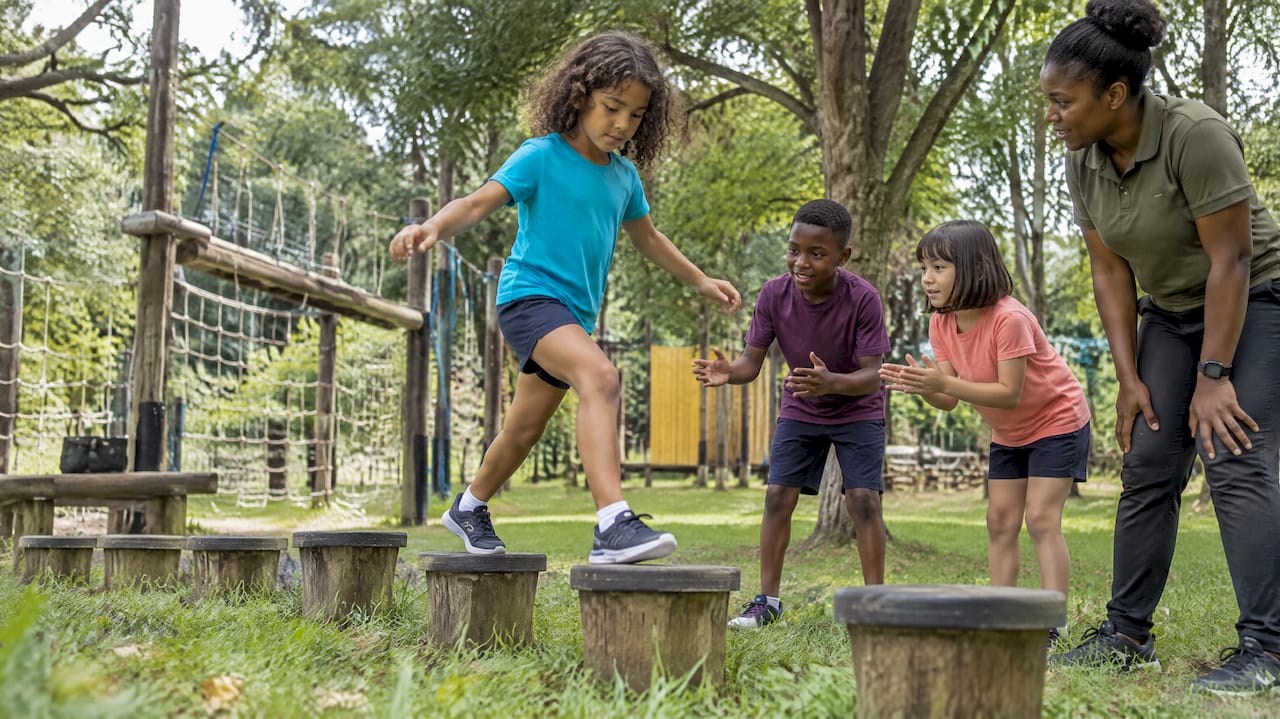
This is the space we work in at Little Rangers Club. We design indoor and outdoor programmes for children aged 3 to 13 around adventure, with facilitators leading activities such as multi-sports, outdoor survival training, nature exploration, water sports, and flight simulator and drone workshops. Schools can read more about why outdoor and sports programmes matter for preschools, or explore our outdoor activities for kids in Singapore.
If you are choosing between a classroom-style enrichment session and time outdoors, our guide on nature-based education versus indoor enrichment sets out how to weigh them.
Aviation and drone learning
For classes interested in STEM, our Aviation Exposure School Programme costs $105 per student. Children are introduced to flying through simulator and hands-on activity formats. Details and enquiries are on our school programmes page.
Year-end activities for kindergartens
Kindergartens often want something special for the end of term. We have gathered ideas on kindergarten year-end activities that suit Singapore schools, from games to outdoor sessions.
Which trip suits which age group?
| Age group | Good fit | Why it works |
|---|---|---|
| Nursery to K2 (ages 3 to 6) | NParks garden walks, Children’s Museum, short outdoor games | Short, sensory and hands-on, with small groups |
| Lower primary (ages 7 to 9) | Heritage trail booklets, HortPark nature exploration, multi-sports | Simple tasks and stories children can retell |
| Upper primary (ages 10 to 12) | Museum workshops, team challenges, drone or simulator sessions | Problem-solving and a sense of ownership |
| Lower secondary (ages 13 to 15) | ABC Waters trail, leadership-style outdoor tasks | Data collection and independent thinking |
If you are mixing ages, keep groups by age within the same venue so the activity never feels too young or too hard.
What to check before you book
Lead times and cancellation rules
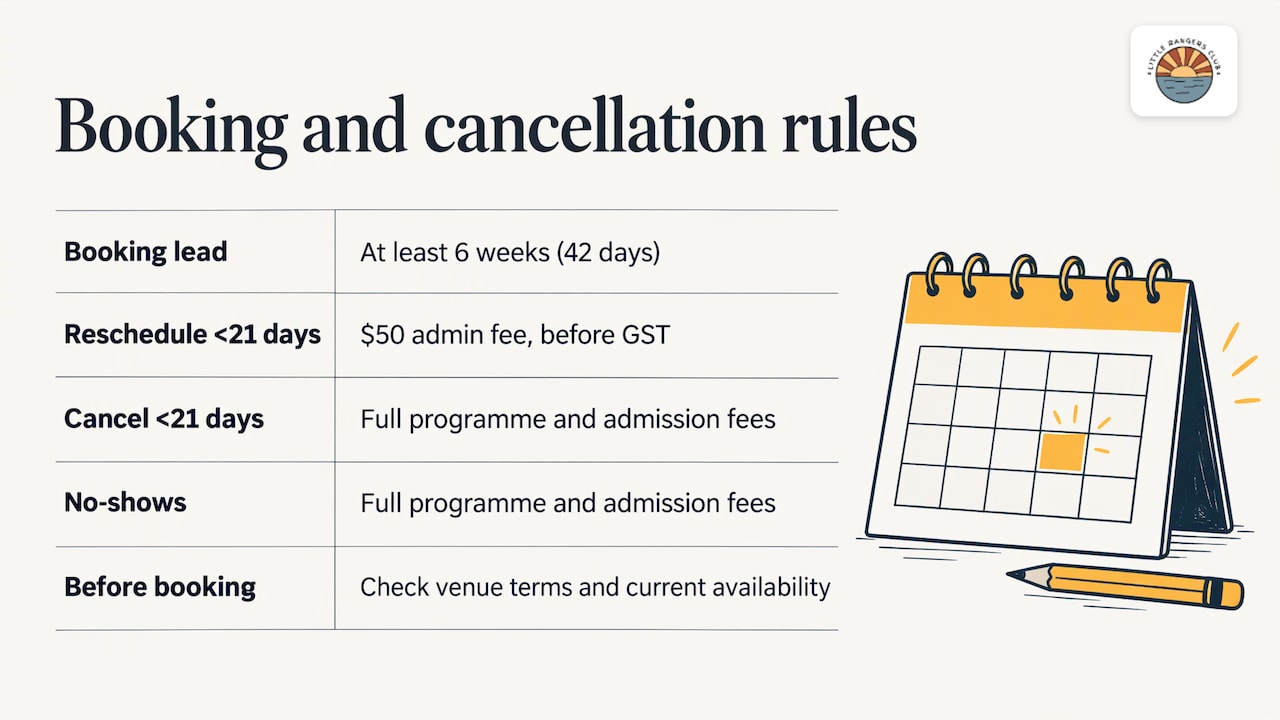
Popular public venues fill up. Children’s Museum Singapore asks schools to book on BookMuseums@SG at least 6 weeks (42 days) in advance. Its rules also include a $50 administrative fee, before GST, for rescheduling less than 21 calendar days before the visit, and full programme and admission fees for cancellations inside 21 days or no shows. Check each venue’s own terms, and look at its current availability rather than relying on last year’s calendar.
Ratios and supervision
PUB’s Marina Reservoir field study guide says the ratio should be one facilitator to 20 students, students should be paired or grouped so no one wanders alone, and the organiser should survey the site and complete a risk assessment in good time beforehand. These are sensible habits for any outing, whether or not the venue requires them. Younger classes usually need tighter ratios than the maximums above, so ask the venue what it recommends.
Safety standards for adventure activities
For outdoor adventure sessions, Singapore has a national standard. SS 710:2024, the Code of Practice for Outdoor Adventure Education, sets minimum requirements and best practice for planning and delivering these activities. It covers the accountabilities of providers, the competence of supervisors and activity leaders, risk management systems, the readiness of locations and facilities, and equipment adequacy. Our commitment to safety and quality instruction is part of how we run our sessions, and we are glad to talk schools through how a session is set up.
A short planning checklist
- Write the learning objective in one sentence.
- Confirm age suitability with the venue.
- Book through the venue’s official channel and note the cancellation terms.
- Agree ratios, buddy pairs and a headcount routine.
- Plan weather cover: shade, water and an indoor fallback.
- Brief parents on timing, attire and any costs.
- Prepare one follow-up classroom activity.
Our perspective on field trips
We have seen the same pattern many times: children remember what they did with their bodies and with their friends. A trail they walked, a team they had to organise, a drone they built and flew.
That is why we build our programmes around adventure. Teamwork, resilience and problem-solving are not lessons we announce at the start. They show up when a group has to work out how to cross, build or finish something together, and a facilitator helps them see what they did well.
For schools, we suggest mixing one “look and learn” outing, such as a museum or garden, with one active session where children lead. The first gives knowledge. The second turns it into confidence. We can tailor activities to different ages, so a K2 class and a Primary 5 class both get something that fits.
Joshua
Bring Little Rangers to your school or class
If you want an active, facilitated session for your pupils, we can help. Our Aviation Exposure School Programme is $105 per student, and we can discuss other adventure and outdoor formats for your age group and group size.
See the school programmes and partnerships page to get in touch. Parents who want similar experiences for their own children can look at our holiday camps or weekly classes.
FAQ
How early should a school book a field trip in Singapore?
It depends on the venue, but popular public venues need weeks of notice. Children’s Museum Singapore asks for bookings at least 42 days ahead through BookMuseums@SG. Start planning a term ahead for busy periods, and confirm availability before telling parents a date.
What are affordable field trip options for young children?
NParks guided walks are a good starting point. The Pitter Patter Potter Garden session for 5 to 9 year olds is listed at $7 per pax, and the Botanic Gardens walks for N2 to K2 are $185 per group of up to 20. Heritage trail booklets from NHB are another low-cost way to structure a visit.
What group size works best for outdoor field trips?
Published guidance from PUB uses one facilitator to 20 students as a ceiling for field studies, and its MacRitchie trail uses 1:10 to 20. For younger children, smaller groups with more adults are easier to manage. Ask the venue or provider for its recommended ratio.
Which activities build teamwork and problem-solving?
Active, shared challenges work best: relays, obstacle tasks, build-and-fly projects and outdoor survival-style games where the group must plan together. At Little Rangers, our programmes are designed around this kind of experiential learning, led by experienced facilitators.
Can a kindergarten run an end-of-year outing?
Yes. Many kindergartens combine a nature or heritage visit with an active game session. Our page on kindergarten year-end activities has ideas to start from.
Sources
- MOE Nurturing Early Learners: providing opportunities for children to gather information
- NParks: guided walks for learners
- Singapore Zoo ticket prices 2026
- NHB Peranakan Museum: schools and educators visit
- NHB: resources for primary schools
- Children’s Museum Singapore: school bookings
- PUB: ABC Waters MacRitchie Reservoir trainer’s guide
- PUB: Marina Reservoir field study guide
- SS 710:2024 Code of Practice for Outdoor Adventure Education