The most useful outdoor survival skills for kids are simple ones: staying calm and staying put when lost, signaling for help, building a basic shelter, tying a few knots, reading a simple map or compass, and knowing how to behave around wildlife. In Singapore, add one more: reading the weather, because lightning, heavy rain, haze and heat decide whether an outing happens at all. This guide shows what to teach at each age, how to practice safely in local parks, and what to look for in a kids’ survival or wilderness skills course.
Key Takeaways
- Start with calm, simple, supervised sessions in a familiar place, then add skills as your child grows in confidence and coordination.
- The core set is staying put when lost, signaling, shelter basics, knots, simple navigation, first aid awareness and respect for wildlife.
- In Singapore, check the weather and lightning status before every outing, and use the haze PSI guidance to decide how strenuous the activity can be.
- A good course publishes how it manages risk, who supervises, and what safety briefing children receive. Singapore has a national code of practice for outdoor adventure education.
- Our outdoor programs build teamwork, resilience and problem-solving through guided adventure, from weekly classes to holiday camps.
Table of Contents
- The Core Skills Worth Teaching First
- What to Teach at Each Age
- Practicing Safely in Singapore’s Weather
- Where to Practice in Singapore
- What a Kids’ Survival Course Usually Teaches
- Questions to Ask Before You Enrol
- Our Perspective
- Build These Skills With Little Rangers
- A Simple Home Practice Plan
- FAQ
- Sources
The Core Skills Worth Teaching First
Survival for a child is not about eating bugs in the jungle. It is about handling the first hour of an unexpected situation well. Teach these in roughly this order.
Staying calm and staying put
Panic leads to bad decisions, and the single most valuable rule for a young child is to stop moving once they realize they are separated from the group, and wait where an adult can find them. Practice it as a game: agree on a “freeze, breathe, call out” routine, and rehearse it on a short walk so it feels automatic.
Signaling for help
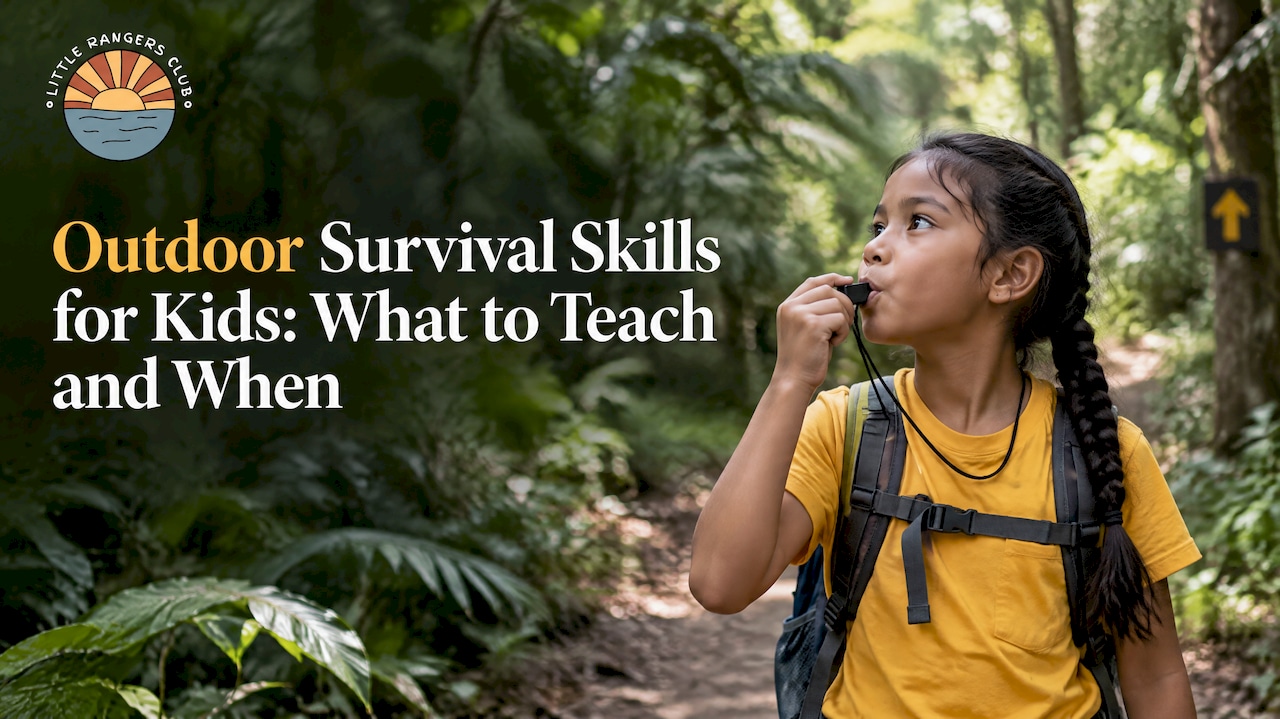
A whistle is light, cheap and carries much farther than a child’s voice. Teach three blasts as a call for help, and let your child try it at a safe distance so they learn how loud it is. Older children can add bright clothing, a signal mirror and large ground markers made from sticks or bags.
Shelter basics
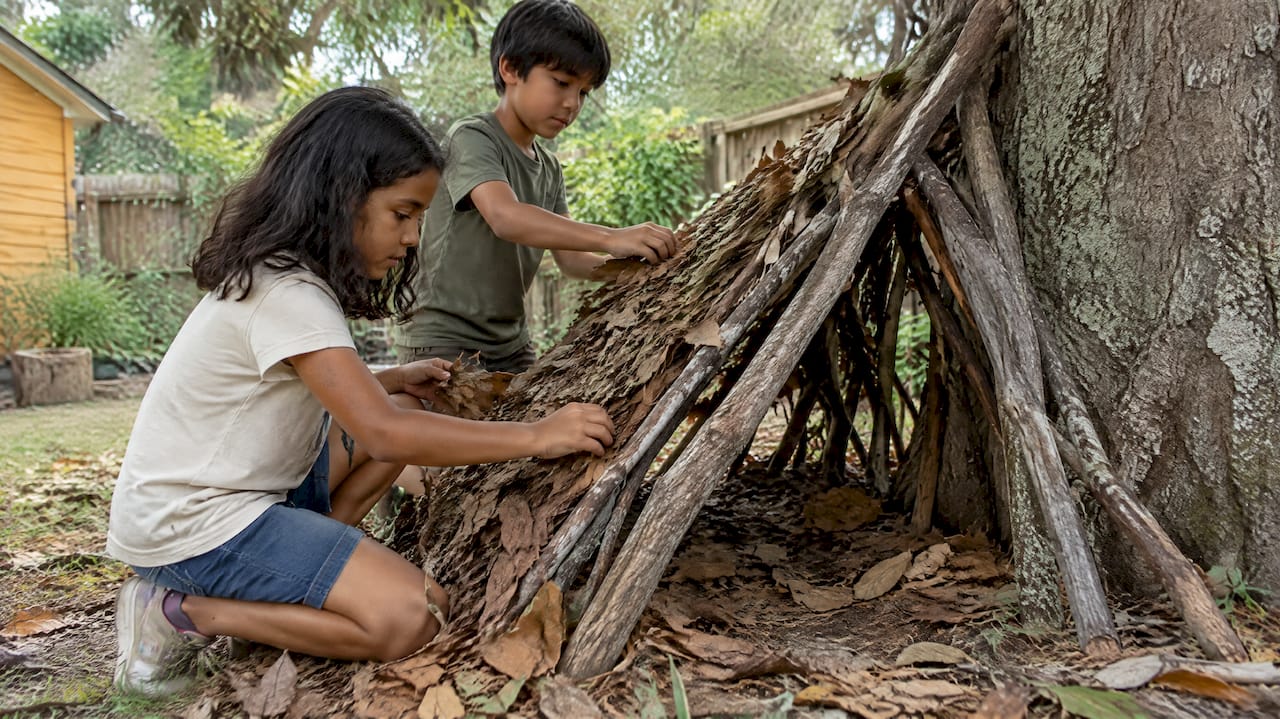
A lean-to made from a fallen branch propped against a tree, with leaves and branches layered on top, teaches children how to think about wind, rain and ground insulation. Do it in a backyard, a playground corner or a campsite you have permission to use, never by breaking living branches in a park.
Knots and rope work
Three knots go a long way: the square knot for joining, the bowline for a fixed loop and the clove hitch for tying onto a post. Younger children do well with thick rope that is easy to grip. Knots also build fine motor skills and patience, which is why they feature in many children’s outdoor programs.
Simple navigation
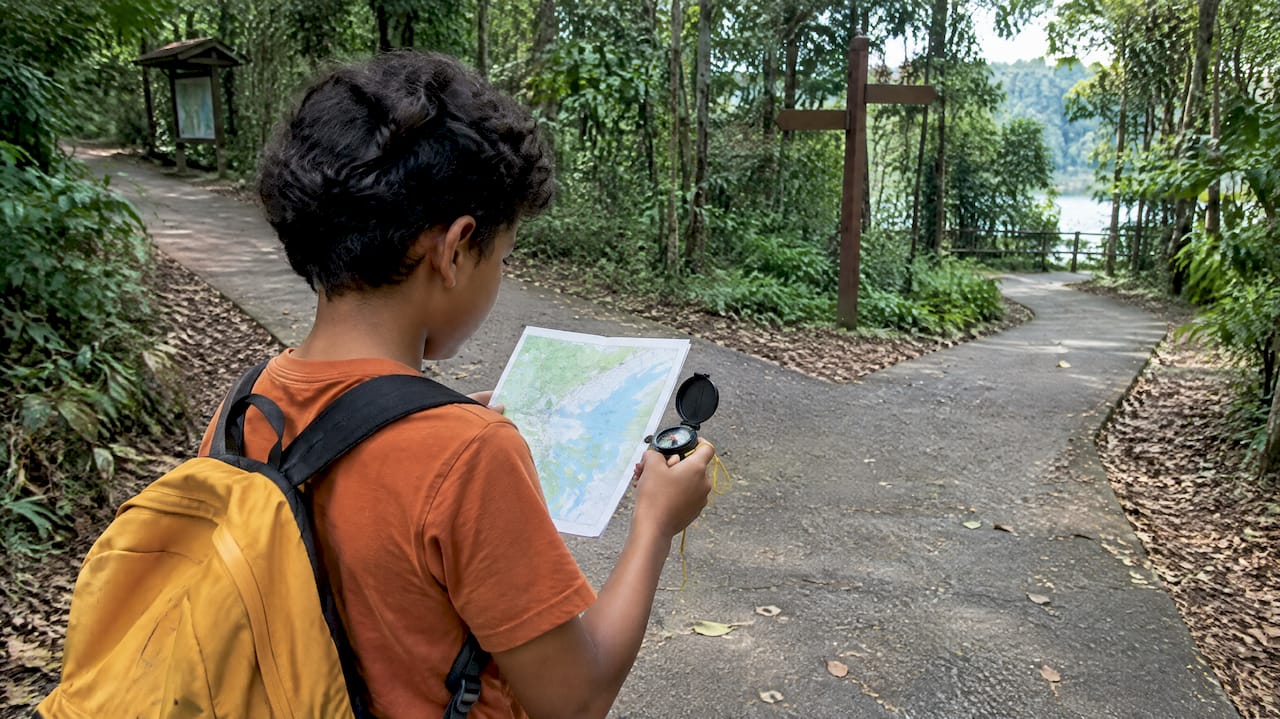
Start with landmarks and a printed park map, then move to a basic compass. Ask your child to tell you which direction the sun sets, how to get back to the car park, and what three things they can see that would help a rescuer find them.
First aid awareness and water sense
Children should know how to tell an adult when they are hurt or unwell, how to carry and sip water regularly in Singapore’s heat, and what to do about a scrape or insect bite. Formal first aid training belongs to qualified instructors, but the habit of speaking up early is something you can build at home.
Respect for wildlife
Singapore’s green spaces are home to monkeys, monitor lizards and much more. NParks has produced a learning resource on responsible human-wildlife encounters for children aged 4 to 6, covering the dos and don’ts of meeting animals. The basics: keep your distance, never feed, never chase.
What to Teach at Each Age
Children develop at different speeds, so treat these as starting points and adjust to your child.
| Age | Focus | Example activity |
|---|---|---|
| 3 to 4 | Staying with the group, whistle use, noticing nature | A short boardwalk walk with a “freeze when you hear the whistle” game |
| 5 to 7 | Shelter basics, thick-rope knots, signaling | Build a mini lean-to in the garden and tie the first knot together |
| 8 to 10 | More detailed shelters, three core knots, map reading | A short guided trail where your child leads using a printed map |
| 11 to 13 | Compass navigation, packing a small kit, planning a route | Plan and pack for a morning nature walk with an adult as a backup |
Tools such as knives are for older children, only after a supervised demonstration, and only with an adult beside them. When you are unsure, keep the tool at home and use rope, cloth and branches instead.
Practicing Safely in Singapore’s Weather
Our climate is the biggest practical difference from survival advice written for colder countries. Heat, sudden storms and haze matter more than bears or blizzards.
Lightning and heavy rain
NParks’ Kids for Nature guide tells teachers to check the weather before any outdoor activity and notes that it is unsafe to bring children outdoors when there is a lightning risk. PUB’s school guidance for Marina Reservoir goes further: organizers should check the forecast and lightning status 1 to 2 hours before each activity, should not start under a Category 1 Lightning Alert or heavy downpour, and should move children to the nearest shelter if it persists. Use the same routine for family practice: look at the forecast, have a nearby shelter in mind, and be ready to stop.
Haze
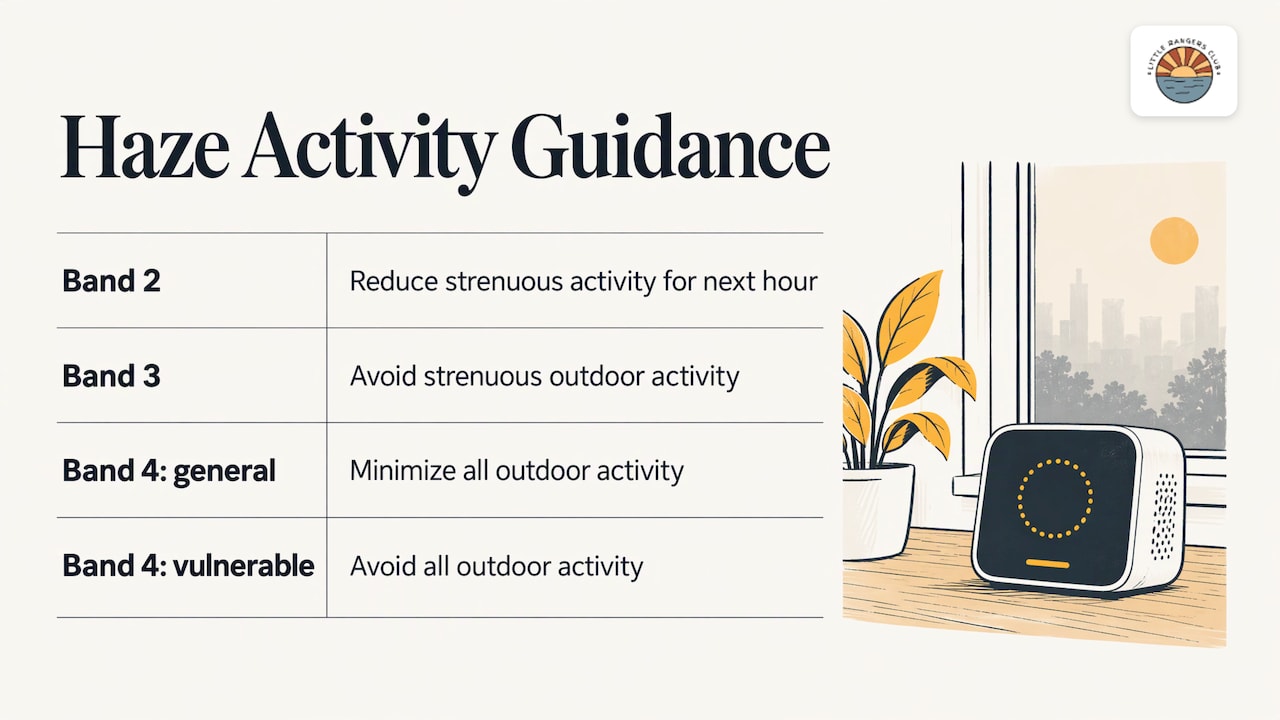
The national haze guide gives action by PSI band. At Band 2 it advises reducing strenuous outdoor activity for the next hour, and at Band 3 it advises avoiding it. At Band 4 it advises minimizing all outdoor activity for the general population, and avoiding all outdoor activity for vulnerable persons, including children. On a hazy day, move the lesson indoors: knots, map reading and a kit check work well at a kitchen table. Children with asthma or other conditions should follow their doctor’s advice.
Heat, sun and insects
NParks’ Pasir Ris Park guide recommends a hat, sunscreen, insect repellent if you are prone to bites, plenty of fluids and sticking to designated paths. Schedule outdoor skills sessions for the cooler morning or late afternoon, and build water breaks into the game itself.
Where to Practice in Singapore
Start on easy ground and progress to wilder trails as your child’s balance and awareness improve. The Health Promotion Board suggests that young children who walk independently begin on paved paths or boardwalks such as the Chemperai Trail at MacRitchie Reservoir or the 600m Rain Forest Walking Trail. As they learn to watch for roots and rocks, they can move to longer trails such as the Treetop Trail or Wallace Trail at Dairy Farm Nature Park.
The Rain Forest Walking Trail at the Singapore Botanic Gardens is a boardwalk, and the NParks trail guide lists “stay on the path” and “be as quiet as possible” among its tips. Quiet walking is itself a survival skill, because it teaches children to listen and observe.
For a bigger adventure, NParks’ Pulau Ubin hiking guidance asks visitors to stay on designated trails, keep away from wildlife, never feed animals and take cover at the nearest shelter in bad weather, avoiding forested areas during and right after heavy rain. These rules double as good habits for any young explorer.
Two local rules to remember: according to NParks, camping in designated campsites requires a permit, and grilling in a park needs a barbecue pit permit. Shelter building should be practiced on private ground or in an organized program, never by damaging park vegetation. For more ideas on where to go, see our guide to outdoor activities for kids in Singapore.
What a Kids’ Survival Course Usually Teaches
The Straits Times has reported that bushcraft skills taught in local courses include making a fire, building a waterproof shelter from scratch, reading compasses and knowing what to do when a crocodile is nearby. The same report said that programs in Singapore typically start at $200 and that participants range from preschoolers to 60-year-olds. Programs for younger children tend to emphasize knot-tying, rope work, forest shelters, risk management and teamwork rather than fire.
That last pairing matters. The life skills, such as judging risk, cooperating and staying composed, are often what parents value most. A child who can calmly work out how to rig a tarp with friends is practicing problem-solving that carries into school and daily life.
If your child is in Primary 1 or 2, NParks’ Kids for Nature programme is built to give children the skills and knowledge to be safe and comfortable outdoors, with eight two-hour lessons per module and a final park excursion. It is a good example of how a structured progression works.
Questions to Ask Before You Enrol
Singapore has a national standard for this field: SS 710, the code of practice for outdoor adventure education. It sets out the provider’s accountabilities, the responsibilities and minimum competence of supervisors and leaders, a risk management system, readiness of locations and facilities, adequacy of equipment, and the minimum safety information given to participants before, during and after activities. Use it as a checklist for conversations with any program you consider:
- Who leads the sessions, and how are staff trained and supervised?
- How is risk assessed for each location and activity?
- What is the plan for lightning, heavy rain, haze and heat?
- What is the ratio of instructors to children for your child’s age?
- What safety briefing do children receive, and what do parents receive?
- What is the emergency plan, and is first aid on hand?
- How does the program step up gradually in difficulty?
A confident provider will answer these easily, and the answers help you pick the right fit for your child’s age and temperament.
Our Perspective
We run children’s outdoor programs because we have seen what happens when a child solves a real problem with their own hands. A nervous seven-year-old ties a knot, helps a team finish a task and walks taller afterward. That confidence is the real survival skill.
We design our programs around three ideas. First, skills grow in steps: a child learns to work as part of a team before taking on tougher challenges. Second, fun and learning belong together, so children stay curious and keep coming back. Third, safety and quality instruction come first, with experienced facilitators guiding every activity.
Parents often ask whether outdoor learning can be started early. Our programs welcome children from 3 to 13, and they are built around adventure, teamwork, resilience and problem-solving. If you want to see how nature-based learning compares with indoor options, our guide to nature-based versus indoor enrichment sets out how we think about it.
Joshua
Build These Skills With Little Rangers
If you would rather have experienced facilitators guide your child, our programs cover outdoor survival training, nature exploration, adventure-based activities and water sports, for children aged 3 to 13. Weekly multi-sports classes give steady, repeated practice in teamwork and resilience: the 10 Sessions Weekly Class Package is $280.
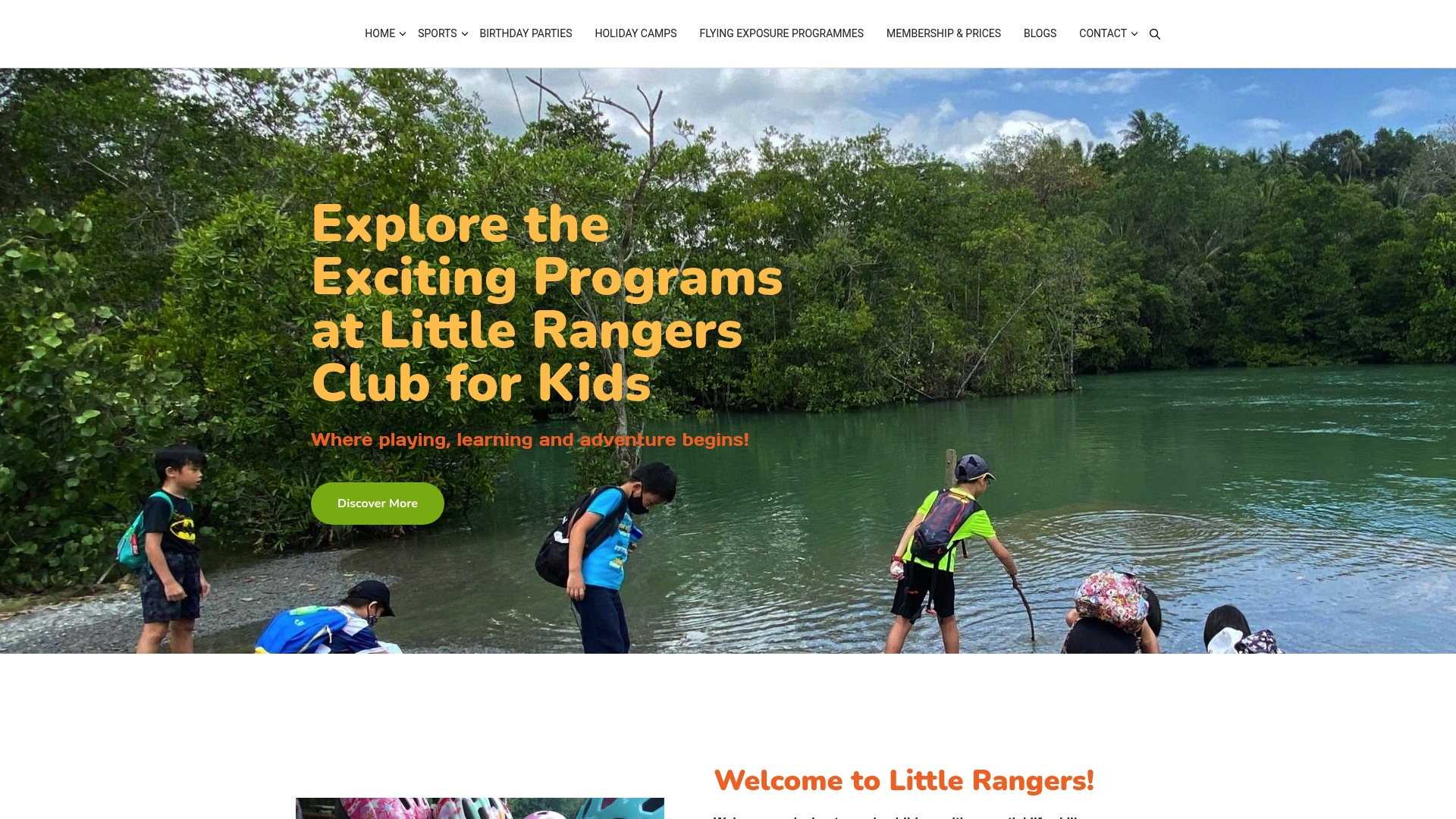
For school breaks, our holiday camps give children several days of outdoor adventure with their peers, and our private classes suit families who want sessions tailored to their child. Prices for camps and private classes are not published, so contact us through those pages for current details. Browse our outdoor adventure camp guide to see what a camp week can look like.
A Simple Home Practice Plan
If you want to start this weekend, try this four-week plan, each session about 30 to 45 minutes.
- Week 1: Stay put and signal. Play “freeze and blow the whistle” in a safe, familiar area. Agree on three blasts for help.
- Week 2: Shelter. Build a lean-to in the garden or a playground corner using fallen branches, a tarp or blanket. Talk about where rain would run.
- Week 3: Knots. Teach the square knot and clove hitch with thick rope. Make it a challenge: who can tie a washing line between two chairs?
- Week 4: Map and mini adventure. Take a boardwalk walk with a printed map. Let your child choose the route, and talk through what they would do if they got separated.
Always demonstrate first, keep the exercises low-risk, supervise at all times and finish by reviewing what to do in an emergency. Cancel or move indoors if the forecast shows lightning or if haze readings are high.
FAQ
At what age can children start learning outdoor survival skills?
Children as young as 3 can begin with simple habits such as staying with the group, using a whistle and noticing their surroundings. Shelter basics and thick-rope knots suit about ages 5 to 7. Older children can add navigation and kit packing with adult supervision.
What should a kids’ outdoor survival course include?
Look for knots and rope work, shelter building, signaling, simple navigation, teamwork and risk awareness, all led by trained supervisors. Local reporting describes bushcraft courses that also cover fire-making and compass reading for older participants. Ask the provider how it manages risk and weather.
How much do outdoor survival programs cost in Singapore?
The Straits Times reported in 2020 that survival skills programs in Singapore typically started at $200. Prices vary with length, age group and format, so check each provider’s current page. Our 10 Sessions Weekly Class Package is $280.
Is it safe to practice survival skills outdoors in Singapore’s weather?
Yes, with preparation. Check the forecast and lightning status before you go, avoid starting during a lightning alert or heavy downpour, and follow the PSI guidance on hazy days. Bring water, sunscreen and a hat, and stay on designated trails.
Can I teach my child these skills at home?
Yes. A backyard lean-to, knot practice with thick rope and whistle games are all good starting points. Keep sessions short, supervise closely and repeat them often. A structured class adds trained facilitators and the chance to practice with other children.
Sources
- Outdoor survival courses beat the odds, The Straits Times
- Code of practice for outdoor adventure education (SS 710)
- Kids for Nature programme, NParks
- Kids for Nature Programme P1 guide, NParks
- Marina Reservoir school activity guidance, PUB
- Haze PM2.5 and PSI activity guide, haze.gov.sg
- Hiking, Pulau Ubin, NParks
- Rain Forest Walking Trail guide, NParks
- Pasir Ris Park guide, NParks
- Responsible human-wildlife encounters, NParks
- Outdoor Activities for Your Children, HealthHub