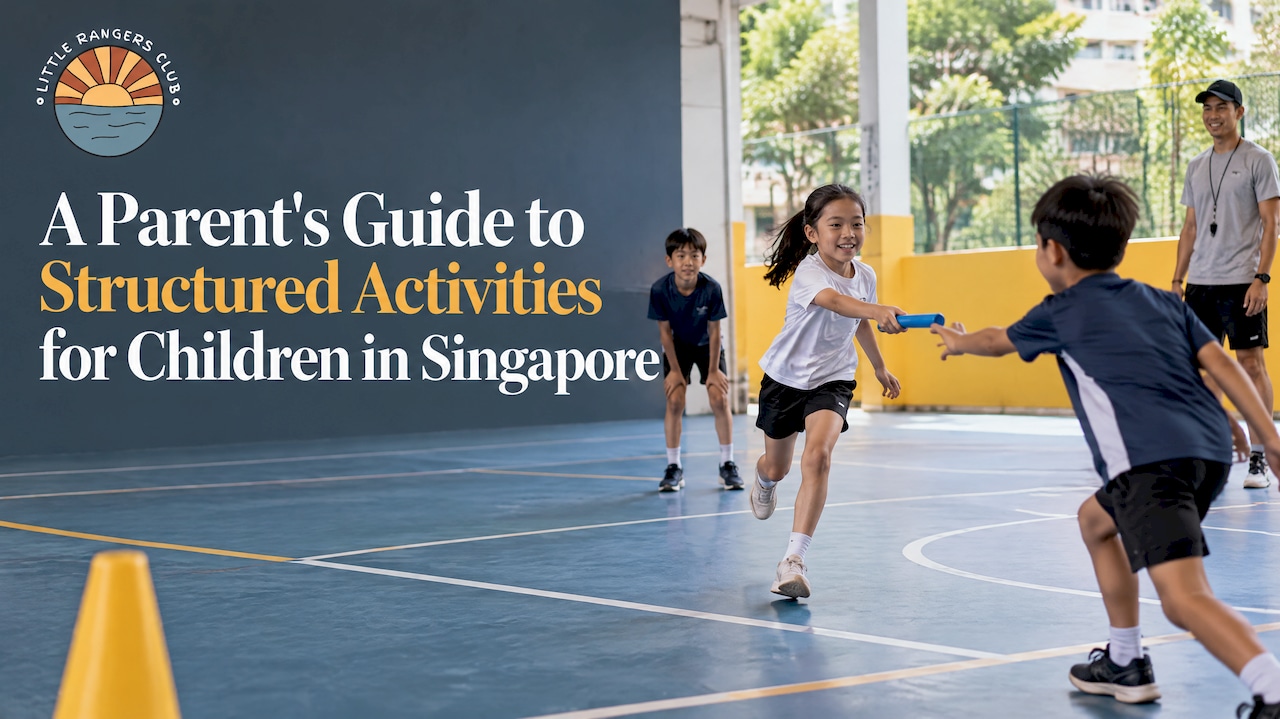
Structured activities are children’s activities with a goal, a set of rules or steps, and an adult who guides them: a multi-sport class, a camp, a team challenge, a workshop or a planned party game. They work best when the level suits your child, the instructor is qualified, and they sit alongside plenty of free time. This guide shows what they build, which types are available in Singapore, how to match them to your child’s age and how to check safety before you book.
Key Takeaways
- Structured activity is guided play with a clear aim. Singapore’s Ministry of Education treats it as one valid point on a range that also includes child-led play.
- Outdoor, movement-based sessions support motor skills, focus, teamwork and resilience, according to ECDA and Singapore academic sources.
- Start with one activity at a time for younger children, and aim for a level that keeps your child interested instead of exhausted.
- Before booking, check the instructor’s credentials, the safety systems, the supervision ratio and the wet-weather plan.
- For birthdays and school events, one well-run structured activity of about 30 minutes, with food and free play around it, keeps the group engaged.
Table of Contents
- What counts as a structured activity
- What structured activities can build
- Types of structured activities in Singapore
- Matching the activity to your child’s age
- How much structure is the right amount
- A safety checklist before you book
- Our perspective
- Planning a structured birthday or group activity
- Start with a class, camp or workshop at Little Rangers
- FAQ
- Sources
What counts as a structured activity
The simplest test: does the activity have a goal and a way to get there? A puzzle, a relay, a build-and-fly workshop and a sailing lesson all do. Wandering around a playground does not, and that is fine, because children need both.
Singapore’s early childhood guidance describes purposeful play as a range, from spontaneous child-directed play to structured teacher-directed play, with a place for every type depending on the learning intent. Teacher-directed play introduces or reinforces specific learning objectives through enjoyable activities, with clear instructions and support, and it is planned to promote children’s choice and sense of wonder.
So the useful question for a parent is not structured versus free. It is which kind of play serves what you want for your child this term: a new skill, confidence around other children, a way to burn energy safely, or all three.
Common formats in Singapore include:
- Weekly classes: the same group and coach each week, so skills build session by session.
- Holiday camps: a full-day or multi-day programme during school breaks.
- Workshops: short, topic-based sessions such as drones or flight simulation.
- Event-style activities: school field days, kindergarten year-end events and birthday parties run by facilitators.
What structured activities can build
Physical skills and health
ECDA states that outdoor learning improves motor skills, strengthens the immune system and reduces the risk of myopia. It also says outdoor learning helps children engage all five senses and improves focus. Running, climbing and balancing build motor skills in ways a classroom cannot fully replicate, according to NIEC, which cites Brussoni et al., 2015.
The Health Promotion Board says increased physical activity in childhood is directly linked to a lower prevalence of chronic diseases later in life. It also reports links to better concentration and attentiveness in class.
Thinking and focus
A 2025 randomized controlled trial of 80 children aged 4 to 6 tested 30-minute structured motor learning sessions twice a week for 12 weeks. It found significant gains in working memory compared with outdoor free play, though not in inhibitory control or cognitive flexibility. The authors suggest combining structured motor learning with free play.
A 2014 study in the Asian Journal of Education and e-Learning found that both approaches improved children’s maths problem-solving, with better progress in structured play lessons. The Child Encyclopedia likewise notes that guided play appears more influential than free play for acquiring academic skills.
Character and teamwork
This is where adventure-based formats shine. NParks’ Kids for Nature programme aims to shape character through experiential learning and build social-emotional skills through group and individual activities. A Singapore primary school’s 3-day, 1-night camp uses sports, low and high elements, hiking and a bridge challenge to develop resilience, teamwork, communication and problem-solving.
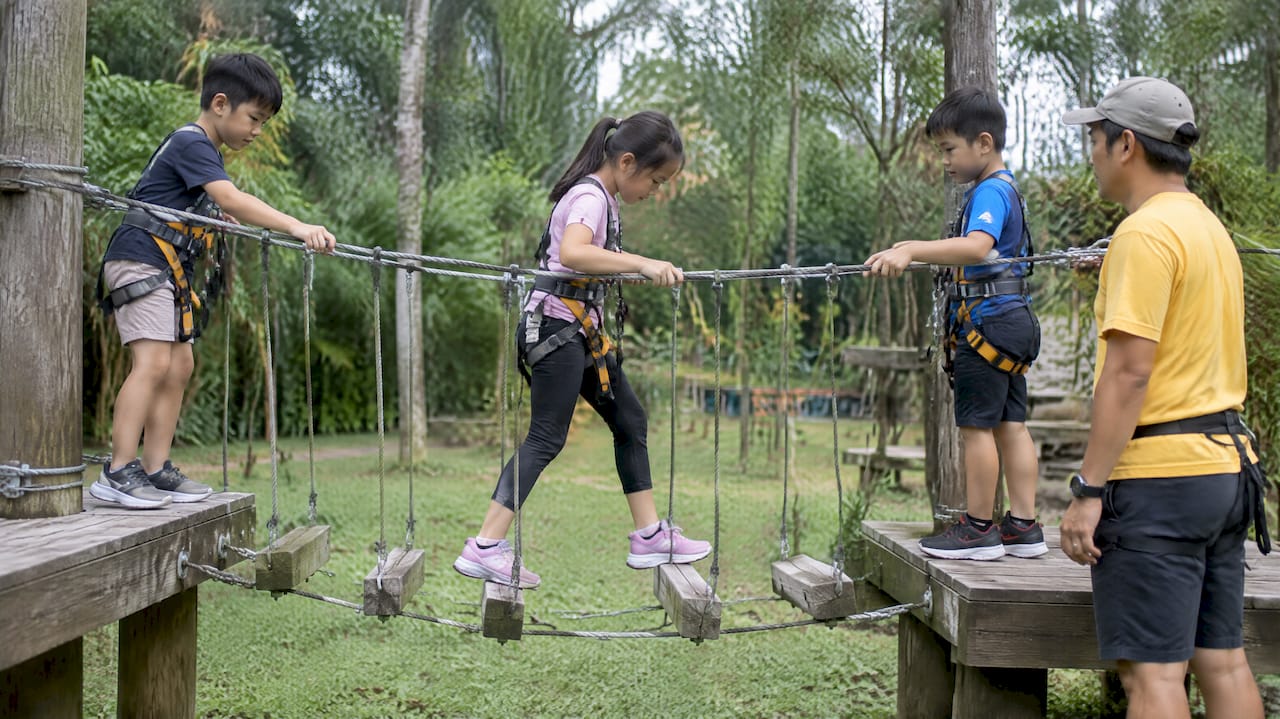
Those are the same skills we aim for at Little Rangers Club: teamwork, resilience and problem-solving, taught through activities children actually want to join.
Types of structured activities in Singapore
Singapore has a wide spread of options, from public programmes to private clubs. Here is how the main types compare.
| Type | Best for | What to expect |
|---|---|---|
| Public sport programmes | First-timers and skill builders | ActiveSG offers over 500 school-holiday sessions across more than 20 sports, including a multi-sport programme, racket sports and aquatics |
| Nature and outdoor education | Children who need to burn energy and explore | Programmes such as Kids for Nature focus on appreciating nature and staying safe and comfortable outdoors |
| School camps and CCAs | Primary-school pupils | Run by the school, usually tied to a year level |
| Private multi-sport classes | Ages 3 to 13 wanting variety each week | Weekly sessions with a consistent coach and group |
| Holiday camps | Working parents and school-break gaps | Full programmes mixing sport, outdoor adventure and workshops |
| Facilitated parties | Birthdays near home | A planned activity, equipment and facilitators brought to you |
You do not always need a venue or a fee to start. NIEC points out that in Singapore’s urban landscape, a void deck, neighbourhood playground or small garden patch can spark curiosity and growth. A paid class then adds what home play often lacks: a coach, a progression and a group of peers.
If you are comparing programmes, our guides to multi-sport camps in Singapore and outdoor activities for kids in Singapore lay out what each format involves.
Matching the activity to your child’s age
Structure should grow with the child. A three-year-old needs short, playful, movement-rich sessions. A ten-year-old can handle rules, teams and a skill progression.
Schools show this pattern clearly. Edgefield Primary School focuses Primary 2 on fundamental movement skills through kids athletics, rope skipping and outdoor learning. By Primary 6, pupils choose one sport such as floorball, fencing, archery tag or volleyball to develop game sense, teamwork and sportsmanship.
A useful rule of thumb for parents:
- Ages 3 to 5: movement basics, simple games, short instructions, lots of encouragement. Our guide to sports for 3-year-olds covers what suits this age.
- Ages 6 to 9: a mix of sports, team challenges and hands-on workshops, so your child can discover what they enjoy.
- Ages 10 to 13: deeper skills and bigger challenges such as sailing, survival skills, flight simulation or drone building.
Level matters as much as age. The SportSG Parents Handbook warns that a programme that is too advanced or strenuous could cause a child to quickly lose interest, and encourages parents to choose an appropriate level of training. If your child comes home excited and asks to go back, the level is right.
How much structure is the right amount
Start from the movement baseline. The 2025 Singapore Physical Activity Guidelines, as published on HealthHub, recommend that children aged three and older spend 60 minutes of their active time at moderate-to-vigorous intensity. They also recommend vigorous aerobic activity and muscle and bone strengthening at least 3 days a week. A weekly class is one strong anchor for that routine, and active play on the other days fills the rest.
For younger children, a KKH-based report in CNA Lifestyle says pre-schoolers should get at least 180 minutes of physical activity a day, and daily outdoor play is encouraged. Structured sessions count toward this, and so does the playground downstairs.
A practical way to build a schedule:
- Begin with one activity, and add another only once your child is settled and enjoying the first.
- Look at the school calendar. Cantonment Primary School, for example, lets each student join one CCA per year, with about 30 sessions each, to keep a healthy balance with academics. Count that CCA before adding more.
- Protect rest and free time. Children need unscheduled time to recover and follow their own interests. The Child Encyclopedia cautions that heavy emphasis on structured activity at the expense of physically active, play-based learning can reduce motivation to learn, so choose programmes that stay playful.
- Watch the signals. Eagerness before class, chatter afterwards and good sleep mean the load is fine. Dread, tears or constant tiredness mean it is time to drop or swap something.
A good structured programme is itself playful. Weekly sessions that rotate sports, challenges and games keep the energy of free play inside a framework, which is how we design our own weekly club activities.
A safety checklist before you book
Safety is where parents should ask the most questions. The following checks apply to any provider.
1. Coach credentials. The SportSG Parents Handbook advises identifying a NROC-certified, Safe Sport-trained coach, confirming proper safety structures are in place, and choosing a coach who puts the child’s development above winning.
2. Standards for adventure activities. For outdoor adventure, Singapore has a code: SS 710:2024 covers the accountabilities of outdoor adventure education providers, the competence of supervisors and activity leaders, risk management, location readiness and equipment adequacy. Ask any provider how they manage these areas.
3. Supervision ratios. Fewer children per adult means more attention for each. As a reference point for water activities, the SCF Paddling Code of Practice 2026 sets active supervision at no more than one supervisor to ten participants. It also requires children on double sit-on-top kayaks to be at least five years old, and those aged twelve and below to be accompanied by an adult at all times. For a wider view of how coaches think about group size, see this explainer on coach-to-athlete ratios.
4. Weather plan. Singapore’s afternoon storms are a fact of life. The same code states that water activities shall not start, or shall stop immediately when official authorities issue lightning or severe weather alerts. It also calls for hydration and heat injury prevention in prolonged hot weather. Ask what the provider does for rain, lightning and heat, and where the indoor fallback is.
5. Fit for your child. Tell the coach about allergies, medical conditions, swimming ability and any worries. A good facilitator wants this information before the session starts.
Our perspective
We run structured activities for children aged 3 to 13 every week, and the pattern we see is simple: children grow fastest when fun and learning happen in the same moment.
A child who is trying to land a drone, crack a team challenge or finish a relay is practising teamwork, resilience and problem-solving without being told to. That is why we build our programmes around adventure: multi-sports classes, outdoor holiday camps, water sports, survival and nature activities, and flight simulator and drone workshops. The rules and the coach give the activity shape, and the adventure gives it energy.
We also believe the best structure is flexible. Programmes should suit different ages and abilities, and our mobile birthday packages come to your home or a nearby venue, so families do not have to travel far for a good experience. Behind all of it sit safety and quality instruction, delivered by experienced facilitators who keep each session positive and memorable.
For parents, our advice is to choose one programme your child is excited about, give it a few weeks, and watch confidence grow on and off the field.
Joshua
Planning a structured birthday or group activity
A birthday party is a structured activity in miniature, and the same principles apply: match the challenge to the ages, keep the main activity focused, and leave room for food and play.
BusyParents suggests a two-hour plan for primary-school-age children: 15 minutes for arrival, 30 minutes for one structured activity, 20 minutes for food, 15 minutes for cake, 20 minutes of free play and 20 minutes for pickup. For preschoolers, shorten the activity.
Our party packages are built around one strong theme with facilitators who run it. Published prices on our parties and events page include:
| Party | Price |
|---|---|
| Combat Skirmish Laser Tag | $360 |
| BLOOP Bubble Games | $456 |
| Water ZOVB and Water Tag Pool Party | $660 |
| Minute To Win It | $680 |
| Indoor Lego Bricks Masters | $680 |
| Laser Clay Shooting | $690 |
| Brick-A-Drone | $750 |
| Amazing Race Party Edition | $780 |
| Sailing & Wing Foil | $950 |
Pick by temperament as well as theme. Competitive, high-energy groups enjoy laser tag or the Amazing Race. Builders and tinkerers prefer Lego or drones. Water-loving groups suit the pool party or sailing. For smaller gatherings, our small group birthday activities are worth a look.
Schools and kindergartens can use the same thinking for year-end events and field activities: one clear challenge, age-matched difficulty, trained facilitators and a wet-weather plan. Our Aviation Exposure School Programme is priced at $105 per student, and our preschool outdoor learning guide explains why outdoor programmes matter at that age.
Start with a class, camp or workshop at Little Rangers
If you want a structured routine for your child, our 10 Sessions Weekly Class Package is $280 for ten multi-sport sessions, a steady way to build skills week by week.
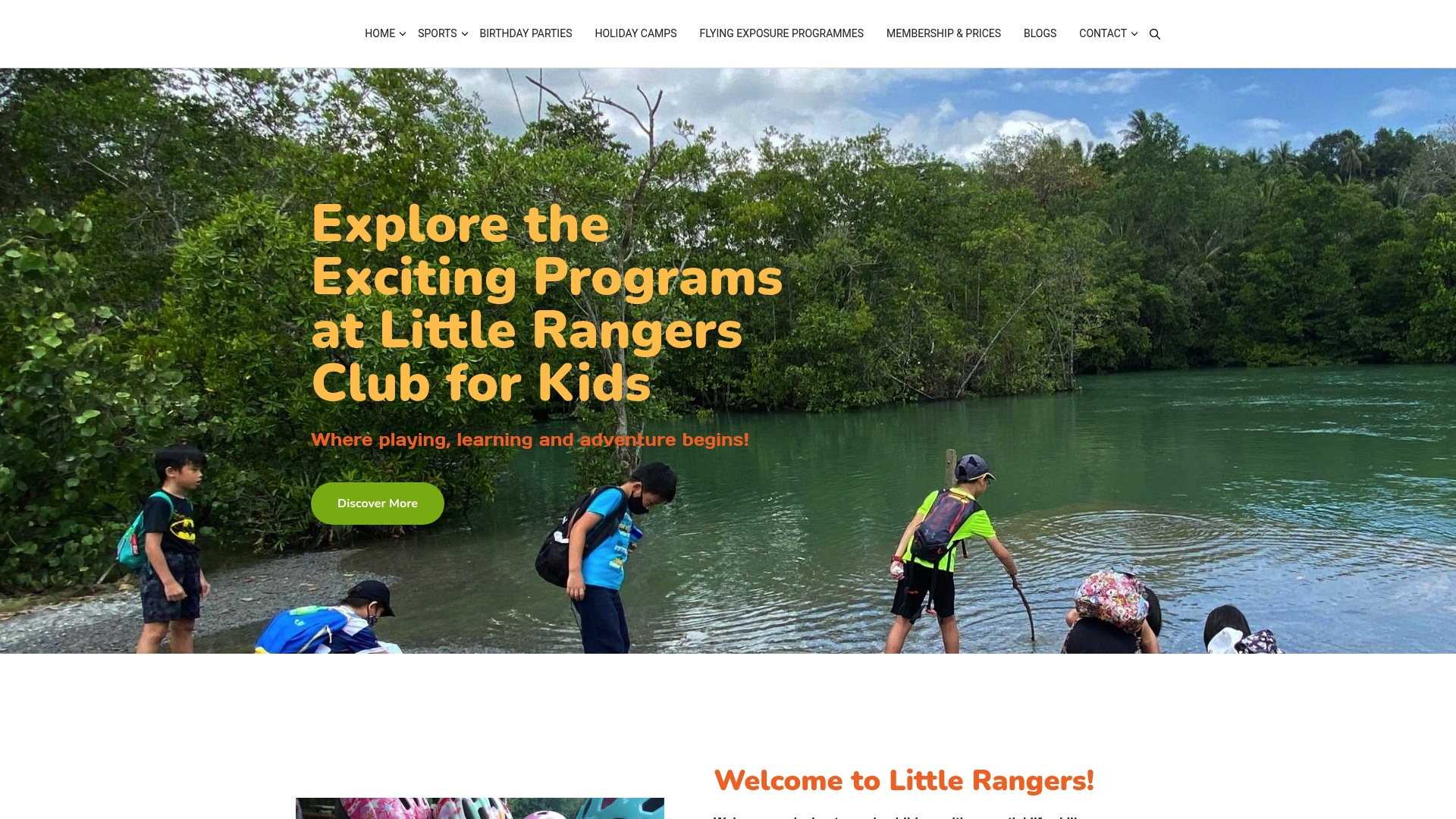
For school breaks, see our holiday camps. For one-to-one attention, ask about private classes. For curious children, our pricing page lists flight simulator experiences from $55 per person for 30 minutes, and drone build-and-fly courses. We are happy to help you pick a level that fits your child.
FAQ
What is the difference between structured activities and free play?
Structured activities have a goal, rules or steps and an adult who guides them, such as a class, a camp or a planned game. Free play is led by the child. Singapore’s Ministry of Education sees both as part of a range of purposeful play, and each has its place depending on what you want the child to gain.
How many structured activities should my child do each week?
For most children, one weekly class is a good start, adding another once your child is settled and enjoying the first. Keep in mind school CCAs and homework, and protect time for rest and free play. The national guidelines on physical activity are a useful guide for the total amount of movement across the week.
What age can children start structured sports and outdoor programmes?
Children can join age-appropriate programmes from around 3 years old, when sessions focus on fundamental movement skills and simple games. Many programmes, including ours, run for ages 3 to 13, with the difficulty adjusted to the age group. Check each activity’s own age and safety requirements, especially for water sports.
What should I ask a provider before booking?
Ask about the coach’s qualifications, the safety and risk management systems, how many children each adult supervises, what happens in bad weather, and how the level is matched to your child. Tell them about allergies, medical needs and swimming ability so they can plan for your child.
Sources
- Engaging Children in Learning through Purposeful Play, MOE
- ECDA, Outdoor Learning
- NIEC, Outdoor Activities to Build Confidence and Skills
- HPB, 60 Minutes of Physical Activity a Day
- Structured motor learning intervention, randomized controlled trial (2025)
- A Comparison of the Effectiveness between Free and Structured Play (2014)
- Play-based learning, Child Encyclopedia
- NParks, Kids for Nature
- Si Ling Primary School, Our Programmes
- ActiveSG School Holiday Programmes
- Edgefield Primary School, Sports
- SportSG Parents Handbook
- HealthHub, Singapore Physical Activity Guidelines 2025
- CNA Lifestyle, children’s physical activity in Singapore
- Cantonment Primary School, CCA
- SS 710:2024 Code of Practice for Outdoor Adventure Education
- SCF Paddling Code of Practice 2026
- Coach-to-athlete ratios explained
- BusyParents, kids’ birthday party two-hour plan