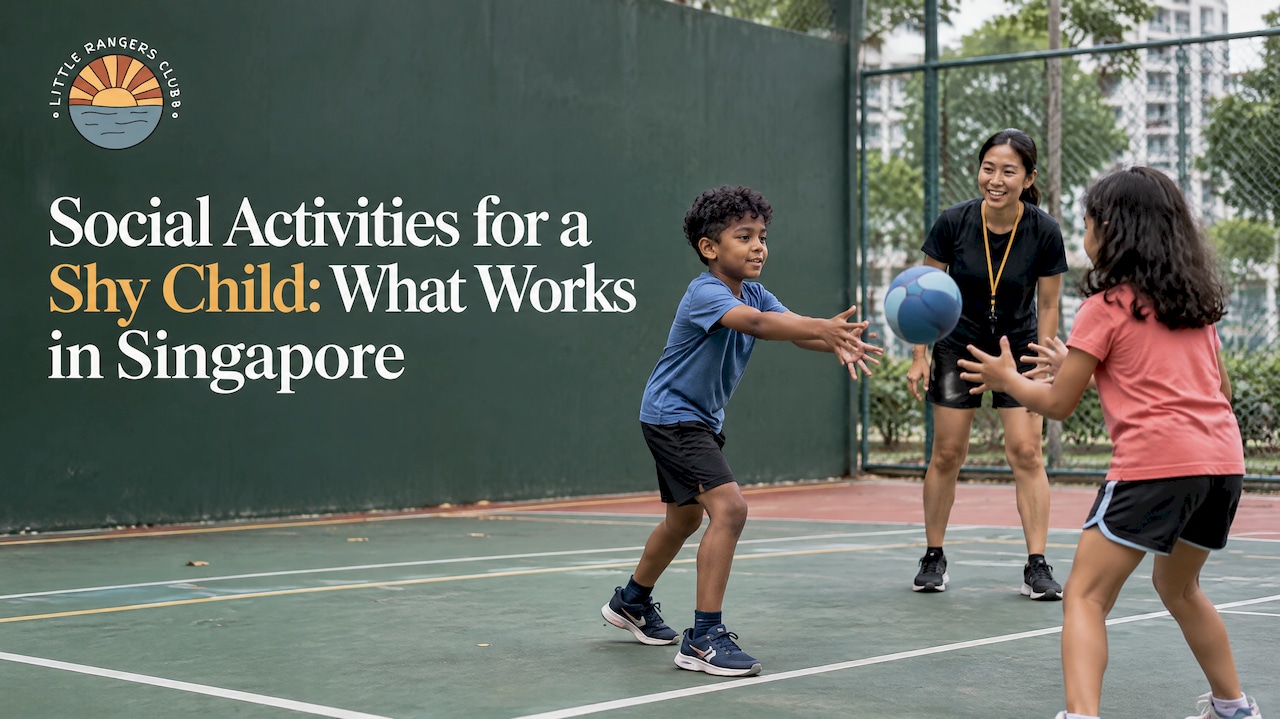
The best social activities for a shy child share three traits: a small group, a shared task that gives children something to do together, and a pace that lets your child warm up without being put on the spot. Weekly multi-sports classes fit that description well, because the game does the talking and nobody has to perform. At Little Rangers Club, children aged 3 to 13 join indoor and outdoor programs built around teamwork, resilience and problem-solving, which is why many parents of quieter children start there.
This guide covers which activities help, how to introduce your child without pressure, how to choose a class that suits their temperament, and when shyness may be something more.
Key Takeaways
- Start small: one or two other children first, then build toward larger groups.
- Pick activities with a shared task, such as team games, building or sport, so your child can join in without having to make conversation.
- Prepare your child beforehand, arrive early, and praise small steps rather than pushing for big ones.
- The aim is comfortable participation, not a new personality. Shy children can leave a group to calm down and return.
- If distress is intense or lasts for months, speak to a GP, paediatrician, school counsellor or psychologist.
Table of Contents
- Shy Is a Temperament, Not a Problem to Fix
- The Stepladder: From One Friend to a Group
- Activities That Help Shy Children Join In
- How to Choose a Class for a Shy Child
- Getting Through the First Session
- What Progress Looks Like
- A Weekly Class to Build Confidence
- Our Perspective
- When Shyness May Be Something More
- FAQ
- Sources
Shy Is a Temperament, Not a Problem to Fix
Before choosing an activity, it helps to be clear about the goal. A developmental-paediatrician’s guidance from Positive Parenting puts it simply: the aim is not to change a child’s personality but to give them tools to take part comfortably while respecting who they are.
Singapore’s Families for Life advises parents to avoid labeling a child as shy, to prepare them for situations that worry them, and to encourage them gently to join in and start activities. It also suggests praising their bravery when they try something that normally makes them anxious.
In practice, that means three habits:
- Do not introduce your child as “the shy one” in front of others.
- Do not speak for them. The Institute of Mental Health (IMH) notes that speaking on a child’s behalf can keep avoidance going, and that pressuring a child to speak may raise anxiety.
- Celebrate effort, such as walking in the door, over outcomes, such as making a friend.
The Stepladder: From One Friend to a Group
Families for Life describes a stepladder approach: begin with small social tasks and build toward harder ones, rather than expecting a child to cope with the scariest situation first. For a shy child, a sensible ladder might look like this:
- One-to-one play. The Raising Children Network recommends playdates and social situations with one or two other children, then gradually moving toward larger groups.
- A small shared activity. Building, a team game or a simple challenge where everyone has a role.
- A weekly class. Repetition matters. The same faces, the same routine and the same coach each week make a space feel familiar.
- Bigger occasions. Holiday camps, parties and school events, once the weekly class feels like home turf.
Children move up the ladder at different speeds. If your child has a rough session, the same Singapore guidance suggests trying again another time with more preparation.
Activities That Help Shy Children Join In
Team games and multi-sports
A game gives children a reason to interact that does not depend on small talk. Passing a ball, running a relay or solving a team challenge puts the focus on the task. That is a big relief for a child who freezes when asked to “just go and make friends.”
The Straits Times reported in 2025 on a Singapore preschool teacher who helped shy children by starting with one-to-one conversations, pairing them with supportive peers for small tasks, and moving on to small-group sharing. In a team block-tower activity, children practiced communication, turn-taking, patience and problem-solving, and quieter children became more vocal as they contributed ideas.
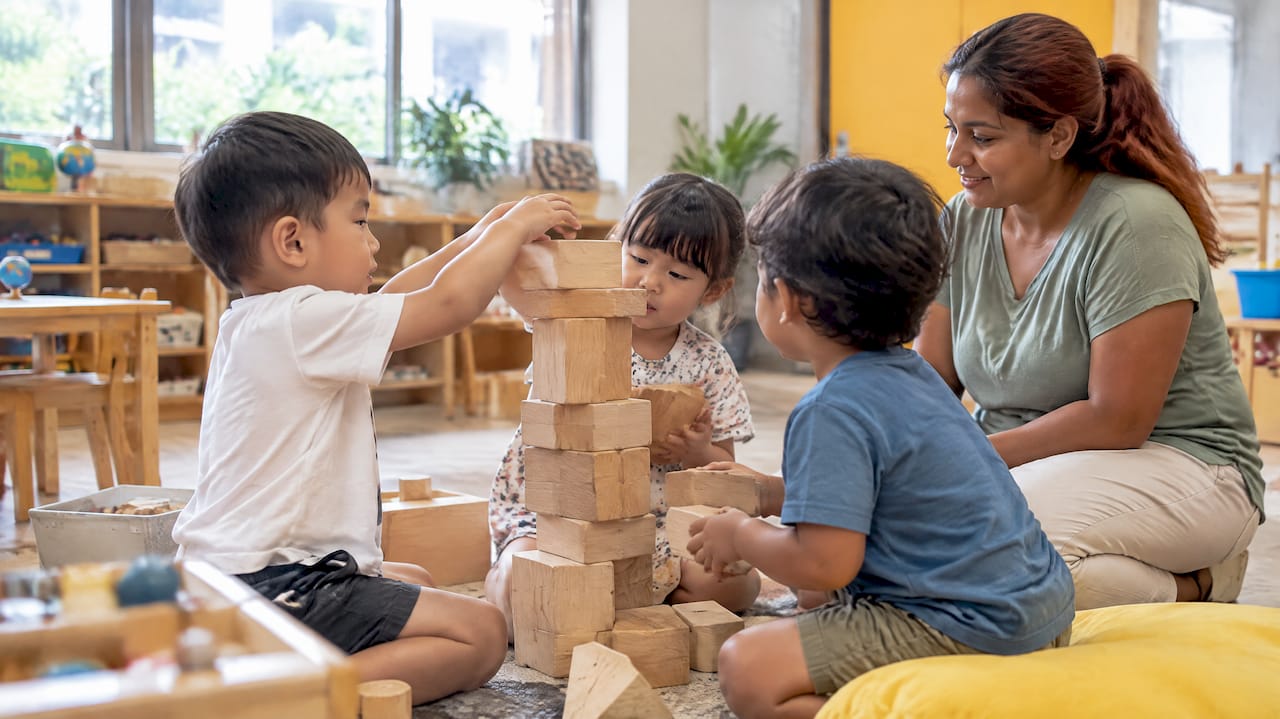
That is the logic behind our weekly multi-sports classes. Each session mixes different games and skills, so no child is stuck being “bad at the one sport.” Teamwork, resilience and problem-solving are built into the activities themselves. You can read more about how we think about multi-sports programs and social development and kids sports clubs that build confidence.
Building and creative play
When a child loves construction, drawing or role-play, that interest is a bridge to other children. Psychologist Eileen Kennedy-Moore writes in Psychology Today that following a child’s interests gives peers something enjoyable to do and talk about.
Research on shy preschoolers points the same way. A peer-reviewed study on supporting shy preschoolers describes sociodramatic play with shared goals, planning, role-play, dialogue and negotiation, and says adult guidance can help children collaborate with peers.
For children who like hands-on projects, our drone building and flight simulator workshops give a shared, absorbing focus. Everyone is looking at the same machine, not at each other.
Clubs and structured groups
CanChild’s Participation 101 guide distinguishes team activities, which suit children who like structured group rules, from individual activities for children who prefer to learn at their own pace. It also lists organized clubs such as Scouts, chess, band and choir as alternatives to competitive sport. For school-age children, the Raising Children Network suggests extracurricular activities that encourage social behavior.
A multi-sports club sits comfortably in the middle. There is a clear structure and routine, but the emphasis is on participation and skill building, not on winning.
Outdoor and adventure activities
Nature exploration, outdoor survival skills and water sports ask children to rely on each other in a way that feels like an adventure, not a social test. Children often find that sharing a small triumph, such as lighting up a challenge or finishing an obstacle together, does more for friendship than any amount of sitting and chatting. Our outdoor survival private classes and nature explorer classes are options for children who prefer a quieter, more curious pace.
Learning social skills at home
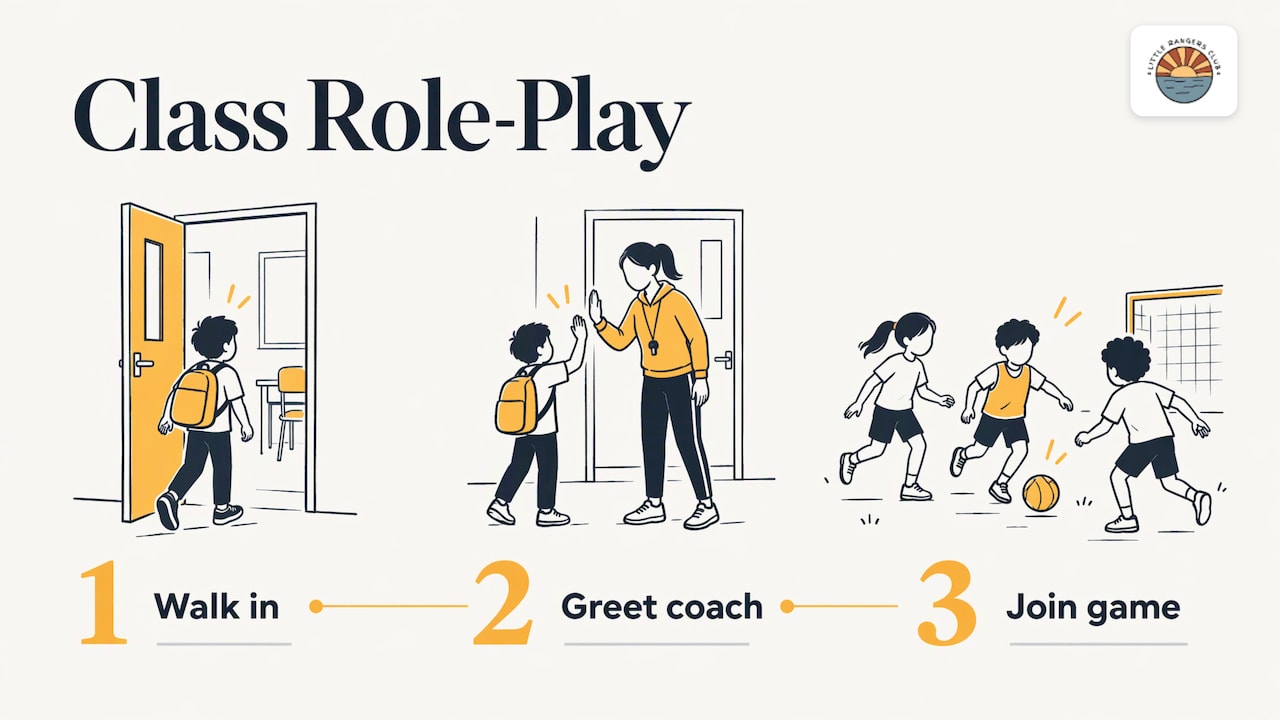
Practice at home makes the class easier. The American Psychological Association recommends one-to-one playdates and practicing public speaking at home, preparing children before gatherings, and choosing one interesting social extracurricular activity rather than several. Kennedy-Moore also suggests simple scripts, such as a greeting, a question or a compliment, so your child has words ready. Try role-playing the first five minutes of a class: walking in, saying hello to the coach, and joining a game.
Group play at home can also build these skills. Games that need cooperation are a good fit, and this step-by-step guide to building team skills with toys offers ideas for turning building and play into teamwork practice. For more on friendships, see our practical steps for helping kids make friends.
How to Choose a Class for a Shy Child
Use your child’s temperament as the starting point, not your own idea of what they should enjoy. The American Academy of Child and Adolescent Psychiatry advises considering each child’s needs, skills and interests, keeping some unstructured time, and responding when a child says there is too much on their plate.
A useful checklist:
| What to look for | Why it helps a shy child |
|---|---|
| A small group or a private option | Fewer faces means less to take in. Parent and child formats or smaller groups can suit shy children at first. |
| Shorter weekly sessions | A predictable rhythm builds familiarity without exhausting your child. |
| A warm, low-pressure setting | Children join in when mistakes are fine and nobody is singled out. |
| Games with shared goals | Children talk because the game needs it, not because they are told to. |
| Flexibility | Time to watch first, take a break and rejoin later. |
| Interests your child already has | A favorite topic gives peers something to talk about. |
For age 3 to 4, a gentler start often matters most. Our guide to sports for 3-year-olds in Singapore explains what to expect at that stage. If your child needs additional support to take part, see our page on inclusive kids sports classes.
When a child needs a very personal start, our exclusive private classes are an option, offering a more personal setting for learning skills before joining a bigger group.
Getting Through the First Session
The first visit is usually the hardest, so a little planning goes a long way.
- Talk it through the day before. Describe what will happen, act out the first few minutes and practice a greeting. Families for Life recommends this kind of preparation.
- Arrive early. The APA’s Sophie’s Shell guide suggests arriving early so a child can acclimatize, bringing a familiar object to talk about and helping set up.
- Stay close at first. The Raising Children Network advises staying with a child in unfamiliar settings, letting them watch, and coaching what to expect. Many parents find that settling into a new sports class goes better with a gradual handover, as in this guide on easing students into a new class.
- Let them watch. Watching is participation too. Do not force your child to approach unfamiliar adults immediately.
- Praise the try. Praise taking part and do not make a big issue of sitting out. Quiet encouragement works better than a pep talk.
- Allow breaks. Healthier Together, an NHS resource, says children should be allowed to leave a group to calm down, work alone when they prefer, and use quiet spaces where possible.
- Keep going. One session is rarely the verdict. Repetition is what builds belonging.
CanChild also recommends adapting a new activity: simplify instructions, shorten sessions, add breaks, and give clear feedback while praising effort and small progress. Our coaches run sessions with that kind of clarity and encouragement, and you can see what other parents say in our child development sports classes feedback.
What Progress Looks Like
Progress for a shy child is quiet. It might be a wave to a coach, answering a question, choosing a teammate, or suggesting an idea in a game. The Pride, from the Singapore Kindness Movement, told the story of a shy five-year-old who became more expressive, sociable and communicative with one-to-one classroom support, simplified instructions and patience, one step at a time.
Notice these small wins and name them: “I saw you pass the ball to Ethan.” The APA advises reinforcing small improvements and not comparing your child with more confident peers.
A Weekly Class to Build Confidence
If you would like your child to practice teamwork in a regular, friendly setting, our 10 Sessions Weekly Class Package costs $280 and is built around multi-sports activities for children aged 3 to 13. Ten weeks gives your child time to learn the routine, recognize faces and grow into the group.

You can see the weekly class package and start there, or explore our holiday camps once your child is comfortable with the routine. For a celebration with a small circle of friends, our small group birthday activities can be run at home or at a local venue.
Our Perspective
We have always believed that a shy child does not need to be made louder. They need a place where joining in feels safe and where the activity gives them a reason to take part.
That is why we build our programs around adventure and shared challenges. When children are working toward a goal together, whether it is a team game, a build or an outdoor task, confidence grows from doing, not from being told to be brave. Our approach blends fun with learning, so children develop teamwork, resilience and problem-solving as part of the play.
We also believe in making it easy to start. Weekly classes give a steady rhythm, private classes offer a personal beginning, and our mobile birthday parties let children celebrate near home with familiar surroundings. Each is led by experienced facilitators with safety and quality instruction in mind.
If your child is shy, give them time, keep the steps small, and choose a setting where effort is noticed. The rest tends to follow.
Joshua
When Shyness May Be Something More
Most shyness is a normal part of temperament. Occasionally it points to social anxiety or selective mutism, and it is worth knowing the signs.
Families for Life says to consider professional help if you are worried that your child’s anxiety is affecting their enjoyment of life. Social anxiety disorder involves anxiety lasting more than six months that significantly affects the child’s life, and a GP, paediatrician or psychologist can be a place to start.
IMH describes selective mutism as different from ordinary shyness: a child may speak normally at home but not in particular settings, use gestures instead of speech, avoid eye contact or freeze. If these behaviors last at least a month, continue beyond the first month of school and interfere with schoolwork or social communication, IMH suggests discussing them with a school counsellor before seeking a formal assessment from a psychologist or psychiatrist.
Positive Parenting lists further red flags: intense fear of judgment that interferes with daily life, persistent silence in specific settings despite speaking at home, and extreme distress such as stomach aches or intense crying before social events. If you see these, speak to your child’s GP, paediatrician or school counsellor.
FAQ
How can I make my child less shy?
You do not need to change who your child is. Prepare them for situations that worry them, start with small social steps and praise their bravery when they try. Choosing one interesting group activity, such as a weekly multi-sports class, gives them regular practice in a predictable setting.
What is the best first social activity for a shy child?
A small, structured activity with a shared goal works best, such as a one-to-one playdate or a team game class. Starting with one or two other children and then building to a larger group is the pace recommended by the Raising Children Network. Our private classes and weekly classes both offer easy ways in.
Should I stay with my child at a new class?
Yes, at first. Staying nearby, letting your child watch and explaining what will happen helps them settle. Over a few sessions, step back gradually as they get comfortable. Arriving early also helps them get used to the space before the others come.
Is it a problem if my child just watches?
Not at all. Watching is often how shy children prepare to join in, and the APA advises not making a major issue of non-participation. Praise the moments they do take part, however small, and let them move at their own pace.
When should I see a professional about my child’s shyness?
Consider it if anxiety is affecting your child’s enjoyment of life, lasts more than six months, or comes with extreme distress before social events. A GP, paediatrician, school counsellor or psychologist can advise. If your child speaks at home but stays silent in certain settings, mention that too.
Sources
- Social Anxiety in Children, Families for Life
- Shyness in children: how to help a shy child, Raising Children Network
- Selective Mutism: Supporting an anxious child, IMH
- Helping Shy Children Thrive Socially, Positive Parenting
- Raising children for life, The Straits Times
- Helping Your Shy Child, Psychology Today Singapore
- Supporting Shy Preschool Children in Joining Social Play, ACM
- Participation 101: Trying a New Activity, CanChild
- Too Shy to Say Hi, American Psychological Association
- Sophie’s Shell: Four Ways to Support Your Shy Child, American Psychological Association
- Afterschool Activities: Striking the Right Balance, AACAP
- Social skills for kids, Today’s Parent
- Social Interaction, Healthier Together
- Once timid and uncommunicative, 5-year-old finds her feet, The Pride
- How to Build Team Skills with Toys
- Martial Arts Student Onboarding for Clubs