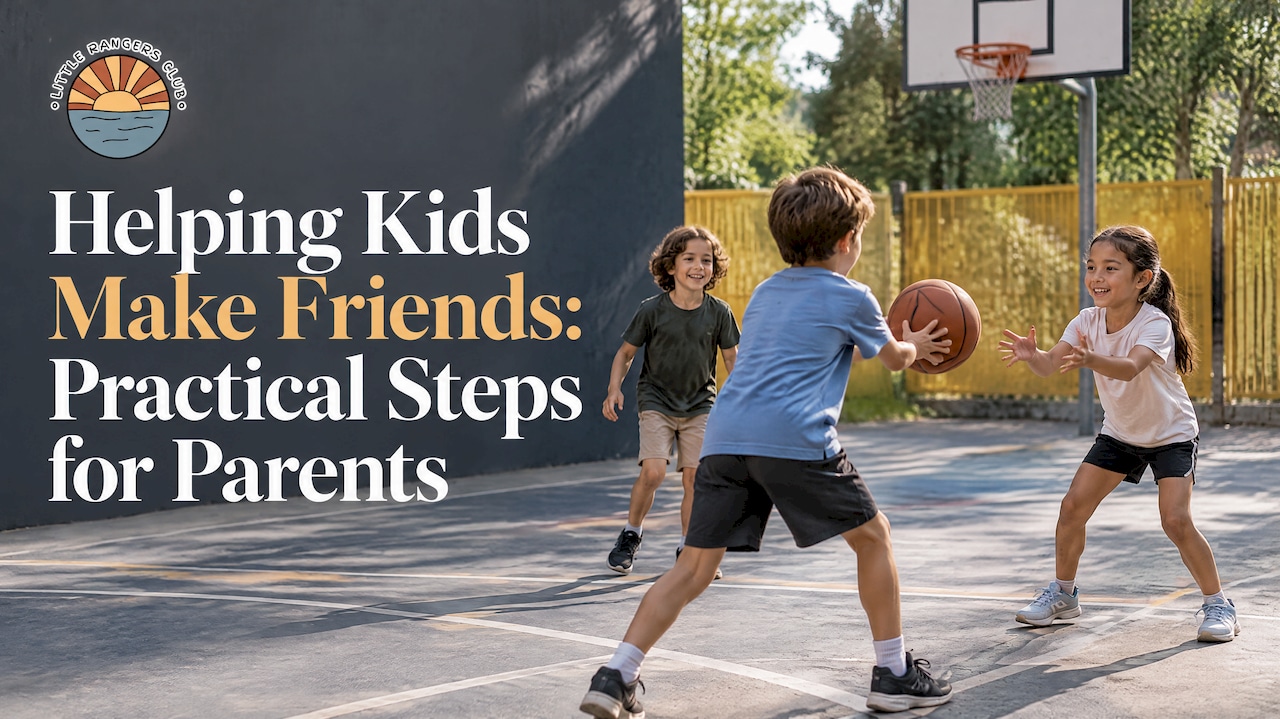
The most reliable way to help a child make friends is to do three things: listen first, practise a few simple opening moves at home, and put your child in small, regular group settings built around something they enjoy. Friendship is a set of skills, and children get better at it with calm coaching and repeated, low-pressure practice alongside the same peers. This guide covers what to say, what to practise, which group activities suit shy or introverted children, and how classes and camps in Singapore can help.
Key Takeaways
- Start by listening. Ask curious questions about what feels hard before you suggest solutions, and ask whether your child wants your help.
- Practise specific lines at home, such as introducing yourself and asking another child’s name, so the first move feels familiar.
- Shared activities beat forced socialising. Sports, games and team challenges give children something to do together, so conversation comes naturally.
- Regular, small groups work better than one-off big events, because children see the same faces and build trust over weeks.
- If your child struggles badly with in-person socialising, a child mental-health clinician can help work out what is behind it.
Table of Contents
- Start by listening, not fixing
- Teach the skills friends actually use
- Why shared activities work better than small talk
- Group activities for shy and introverted children
- How kids camps build friendships and social skills
- Birthday parties as a friendship tool
- When to step in, and when to step back
- Our perspective
- Weekly classes and camps at Little Rangers
- FAQ
- Sources
Start by listening, not fixing
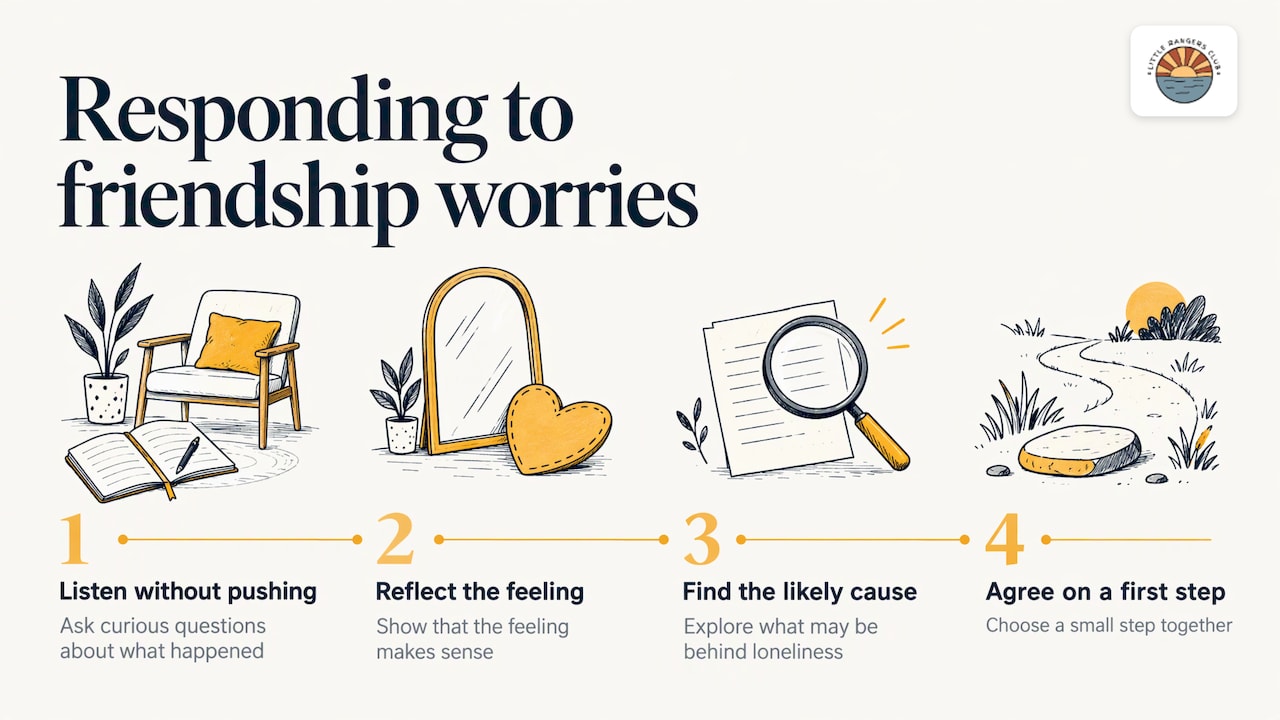
When a child says nobody wants to play with them, the instinct is to solve it at once. Singapore’s Health Promotion Board suggests a gentler route: listen to your child’s friendship concerns and ask curious questions so they can think of ways to solve the problem themselves. Questions such as “What happened at recess?” or “What would you like to be different?” open the conversation. “Why don’t you just go and talk to them?” tends to close it.
The Child Mind Institute adds a few steps worth following in order: listen without pushing, reflect the feeling back, find the likely cause of the loneliness, and agree on a small first step. Reflecting sounds like this: “It sounds like you felt left out when they picked teams.” You are not agreeing that everyone is unkind. You are showing that the feeling makes sense.
Singapore’s ANZA community also recommends asking your child whether they would like your help rather than assuming they do. Older children in particular want a say in how much you get involved.
Find out what is behind the hesitation
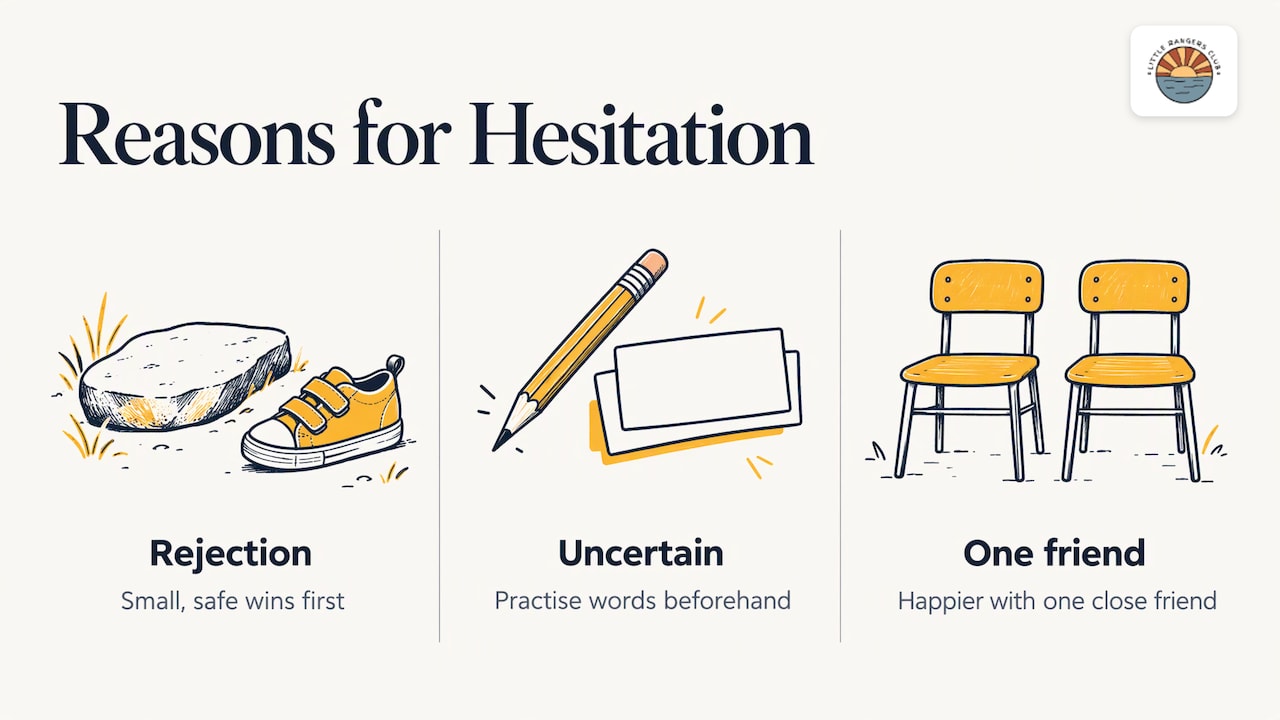
A child who hangs back may be afraid of being rejected, unsure what to say, or simply happier with one close friend than a crowd. The Health Promotion Board advises that when a child hesitates, you ask about their reasons or fears and practise what they could say beforehand. Knowing which one it is changes your approach. A child who lacks words needs scripts. A child who fears rejection needs small, safe wins first.
Teach the skills friends actually use
Friendship skills are concrete, and you can teach them. Singapore’s Ministry of Education describes relationship management in its early learning framework as establishing and keeping friendships, showing care, cooperating, sharing, taking turns and using strategies to handle disagreements. Its examples are the kind of thing you can rehearse at the dinner table: inviting a friend to play, starting a conversation, helping someone, and suggesting a way to settle a difference.
Here is a simple set to work on, one at a time:
- The opening line. “Hi, I’m Mia. What’s your name?” The Health Promotion Board lists introducing yourself and asking another child’s name as a line worth practising beforehand.
- The join-in. “Can I play too?” Raising Children Network suggests role-playing how to join play and take turns so your child has seen it done before trying it for real.
- The follow-up question. ANZA points to conversation starters and attentive listening with follow-up questions as practical skills. “What’s your favorite game?” is followed by “Why do you like it?”
- Kindness and inclusion. Ask your child at the end of the day what they did to make another child feel included. The habit matters more than any single answer.
- Handling a disagreement. Practise a phrase for when things go wrong, such as “Let’s take turns” or “How about we do it your way first, then mine?”
Children copy what they see. The Illinois Early Learning Project advises adults to model empathy and inclusion, create chances to work and play together, and leave room for children to practise on their own. How you greet a neighbor or include a new parent at pickup is a lesson in itself.
Why shared activities work better than small talk
A child who has to make conversation from nothing has a hard job. A child who is building, racing or passing a ball has something to talk about, and the activity carries the awkward moments.
Harvard Health recommends organising children’s interactions around shared interests, such as sports or other peer activities, outings with classmates’ families, and cooperative playdates like baking or park visits. Singapore’s Health Promotion Board makes an age-based point: parents can create safe social opportunities such as playground time, playdates and birthday parties for younger children, and interest-based CCAs or hobby groups for older children.
Team games teach the exact skills friendships need: taking turns, cooperating, playing fairly and recovering from a loss. If you want a view on how sport builds those habits, this piece on youth sports team themes covers cooperation, fair play and conflict resolution from a coach’s angle.
What the best group activities have in common
When you compare options for your child, look for these features:
- A small group. Six to ten children are easier to know than sixty.
- A shared goal. A mission, a game or a build gives everyone a role.
- Repeated meetings. Seeing the same children each week turns “a kid in my class” into “my friend”.
- A facilitator who mixes the groups. Good coaches pair children thoughtfully, so shy children are not left to choose partners.
- Room for different strengths. Some children shine at running, others at building or strategy.
Group activities for shy and introverted children
An introverted child is not a child with a problem. They often want fewer, deeper friendships and need time to warm up. What helps is lowering the cost of the first step.
Give them a bridge. ANZA suggests that for a child who is not naturally outgoing, you can bring a toy, a pet or snacks as an ice-breaker and encourage them to try starting play at a playground or park. A ball or a card game gives another child an easy reason to come over. Raising Children Network also suggests bringing a ball or shared game to help your child start something.
Start with a strength. A child who feels capable is braver about joining in. Pick an activity where they already have some skill or curiosity, whether that is building, running, drawing or anything else, so they arrive with something to offer.
Choose structure over free-for-all. Many quieter children find unstructured play, such as a crowded playground, harder than a guided activity with clear rules. In a structured game, everyone knows what to do, and a shy child can join in without needing to make the first move.
Go early and go often. Arriving a few minutes before the group lets your child settle in and meet the facilitator before the crowd arrives. Weekly classes also give the repetition shy children need.
Break it into small steps. The Child Mind Institute recommends breaking intimidating steps down and supporting attempts without forcing them. Week one might just be arriving and playing the game. Week three might be partnering with one named child. Praise the effort, not just the outcome.
How kids camps build friendships and social skills
A camp compresses weeks of social practice into a few days. Children are together all day, work in teams, try things they have not done before, and sort out small conflicts with a coach nearby. Singapore’s Schoolbag, from the Ministry of Education, reports that camp experiences can help students take responsibility, solve problems and manage conflicts. The same article describes students who made friends with peers from another school and built trust with teammates by helping each other through camp activities.
Singapore invests in this at a national level. The MOE’s refreshed Character and Citizenship Education curriculum uses camps and CCAs to help students develop the “I am, I can and I have” mindset, meaning positive self-beliefs, skills to overcome challenges and strong support networks. Outward Bound Singapore opened its largest campus on Coney Island in September 2026, and The Straits Times reports that its Secondary 3 programme groups students from three or four schools into teams of 12 to 14 to create chances for interaction across schools.
Shared activity can also cross social lines. The Straits Times reported on a football camp that brought together 33 children aged 6 to 11 from different races so they could understand one another’s culture better.
For younger children, a day or holiday camp is the same idea at a smaller scale. When you choose one, ask how groups are formed, how many children each coach looks after, and whether activities are team-based. Our own guides to multi-sport camps in Singapore and holiday camps for 2026 explain what to look for.
Birthday parties as a friendship tool
For younger children, a birthday party is one of the easiest ways to bring friends together, and the Health Promotion Board lists it among the social opportunities worth creating. A party with a team game gives guests something to do besides stand around. It also lets a quieter birthday child lead an event they know well.
A few ideas for getting more out of a party:
- Invite a mix: one or two close friends, plus a classmate your child would like to know better.
- Choose a team-based format over a performance, so no child is on the spot.
- Keep the guest list small enough that every child gets to join in.
We run mobile party packages that come to your home or a local venue, with trained facilitators leading the games. Examples include the Combat Skirmish Laser Tag Birthday Party at $360, the BLOOP Bubble Games Birthday Party at $456 and the Amazing Race Party Edition at $780. Team missions and relay-style games suit mixed groups well. For more ideas, see our kids birthday party ideas.
When to step in, and when to step back
Most friendship wobbles are normal. Children fall out, make up and fall out again. A good rule is to coach before and after, and stay out of the middle. Before an event, rehearse. Afterward, listen and brainstorm. During play, let your child try.
Step in more actively when your child is being excluded repeatedly, is upset for weeks, or when conflict looks like bullying. Then speak to the teacher or school counselor.
The Child Mind Institute suggests that if a child struggles with in-person socialising, it may be worth speaking with a child mental-health clinician, since the difficulty can involve social skills, anxiety, depression, immaturity or simply different interests. For children with disabilities or developmental delays, the Illinois Early Learning Project recommends pairing children thoughtfully, providing adaptive equipment and designing activities that support shared play. Tell the facilitator ahead of time what your child needs so they can plan for it.
Our perspective
We run weekly multi-sports classes, holiday camps and parties for children aged 3 to 13, and the same pattern shows up again and again: children make friends fastest when they are busy doing something together.
That is why we build our programs around adventure, teamwork and problem-solving instead of sitting-and-chatting formats. A child who is working out how to cross a challenge with two teammates is learning to ask, to listen and to trust, without anyone calling it a lesson.
We also think consistency matters. A weekly class lets a hesitant child see the same coach and the same faces, so the first awkward session becomes a familiar one by week three. Our facilitators set up teams and partners so no child is left to pick last.
Fun and learning belong together. When children are having a good time, they take the small social risks that build confidence, and that confidence carries back to school and the neighborhood.
Joshua
Weekly classes and camps at Little Rangers
If you want a steady place for your child to practise teamwork and meet other children, our 10 Sessions Weekly Class Package is $280. It is a multi-sports program for children, built around games and team activities, and it gives your child ten weeks with the same group. You can read more about how we approach this in our guide to multi-sports programs and social development.
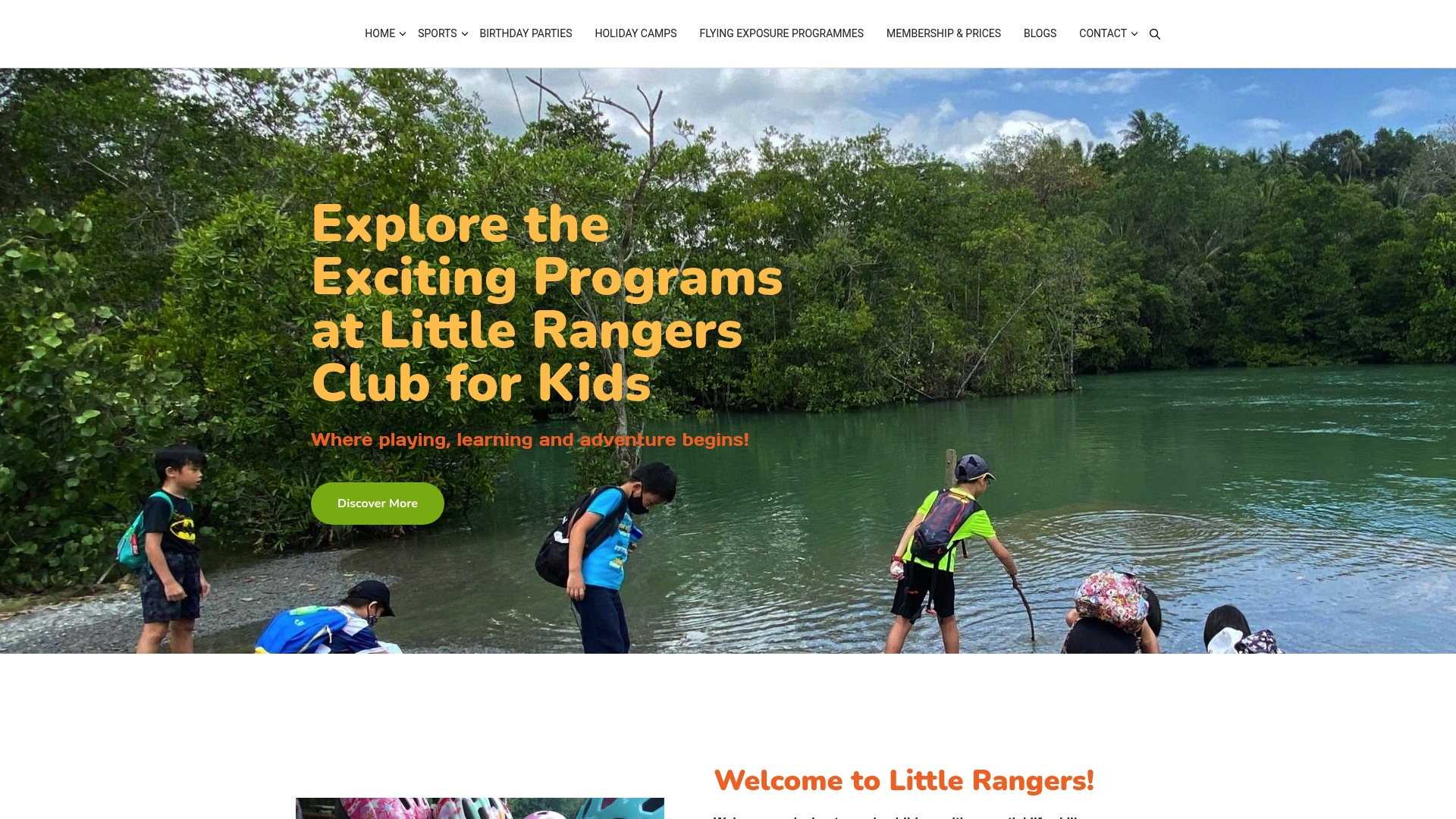
For school breaks, our holiday camps bring children together for a full program of outdoor and team activities. If your child would do better with one-to-one attention first, we also offer private classes. Contact us through the site to talk about which format fits your child’s age and personality.
FAQ
How can I help my shy child make friends?
Start with small steps and a shared activity. Practise an opening line at home, bring a ball or game to the park as an ice-breaker, and choose structured, small-group settings where the rules are clear. Praise effort, and avoid pushing your child into big groups before they are ready.
What group activities are best for making friends?
Activities built around a shared goal work best, such as team sports, building projects, camps and cooperative games. Harvard Health recommends organising interactions around shared interests. Look for small groups that meet regularly so children see the same faces each time.
Do kids camps help with social skills?
They can. Camps give children time to work in teams, try new activities and manage small conflicts with an adult close by. Singapore’s Ministry of Education uses camps and CCAs for exactly these reasons. Choose a camp with team-based activities and well-mixed groups.
At what age should I start arranging playdates or group activities?
The Health Promotion Board suggests playgrounds, playdates and birthday parties for younger children, and interest-based CCAs or hobby groups for older ones. Children as young as three can start with short, structured sessions. Keep them brief and let your child set the pace.
When should I worry about my child’s friendships?
If your child is lonely for weeks, avoids social situations, or seems anxious or sad, talk to their teacher and consider seeing a child mental-health clinician. Repeated exclusion or bullying also calls for speaking to the school. Occasional fallings-out are a normal part of growing up.
Sources
- Parenting For Wellness, Helping your child build healthy relationships and supportive networks (Health Promotion Board)
- How to Help a Lonely Child (Child Mind Institute)
- Making new friends: Tips for children (ANZA)
- How to help your child make friends (Raising Children Network)
- Competency 4: Build relationships with family, friends and others (MOE Nurturing Early Learners)
- Friendships for Young Children (Illinois Early Learning Project)
- Helping children make friends: What parents can do (Harvard Health)
- Football camp to get kids of diverse races, cultures to mingle (The Straits Times)
- Three lessons from camps that can’t be taught in class (Schoolbag)
- Nurturing Confident, Resilient Learners (MOE)
- Largest OBS campus opens on Coney Island (The Straits Times)