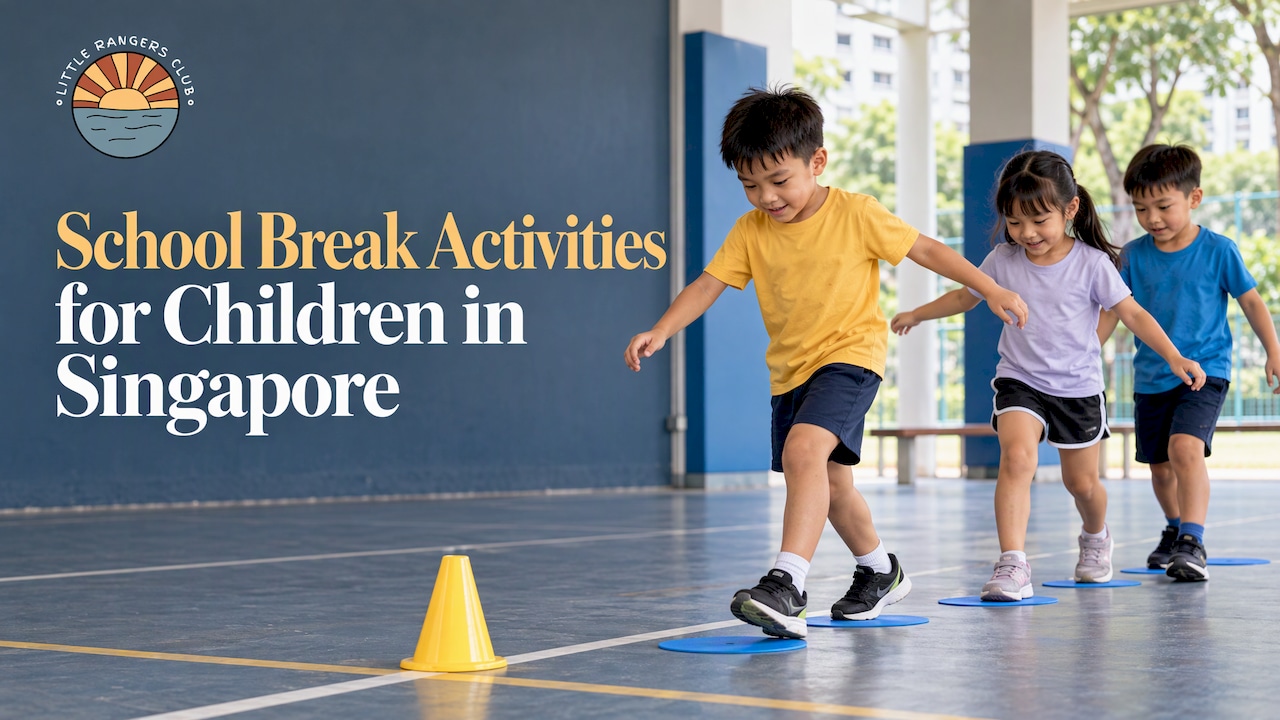
The best school break is not a packed calendar of outings. It is a steady weekly rhythm: one or two structured, active sessions led by trained facilitators, a few free or low-cost outings, and plenty of unhurried time at home. If you are a parent, or a preschool planning a year-end programme, that rhythm keeps children moving, learning and rested. At Little Rangers Club we run holiday camps, weekly multi-sports classes and mobile programmes for ages 3 to 13, so this guide shows where structured activity fits and how to choose it well.
Key Takeaways
- Build the break around a weekly rhythm: a structured active session, an outing, and free time. The Straits Times holiday guide advises against packing every day.
- Choose activities for your child’s age and ability, and match the time of day to Singapore’s heat and humidity.
- Camps and classes work best when they build a skill children can name afterwards: teamwork, resilience, problem-solving or water confidence.
- Preschools already have outdoor time written into their requirements. A visiting facilitator can add variety to that time at year end.
- Mix paid programmes with free options such as museum festivals, parks and playground days.
Table of Contents
- Know how long the break really is
- A weekly rhythm that works
- Match the activity to the child’s age
- What children gain from a structured camp
- Keep outdoor activities safe in Singapore’s climate
- Free and low-cost options
- For preschools: year-end activities that fit the curriculum
- Plan a birthday around the break
- Where our programmes fit your break
- Our view on school breaks
- FAQ
- Sources
Know how long the break really is
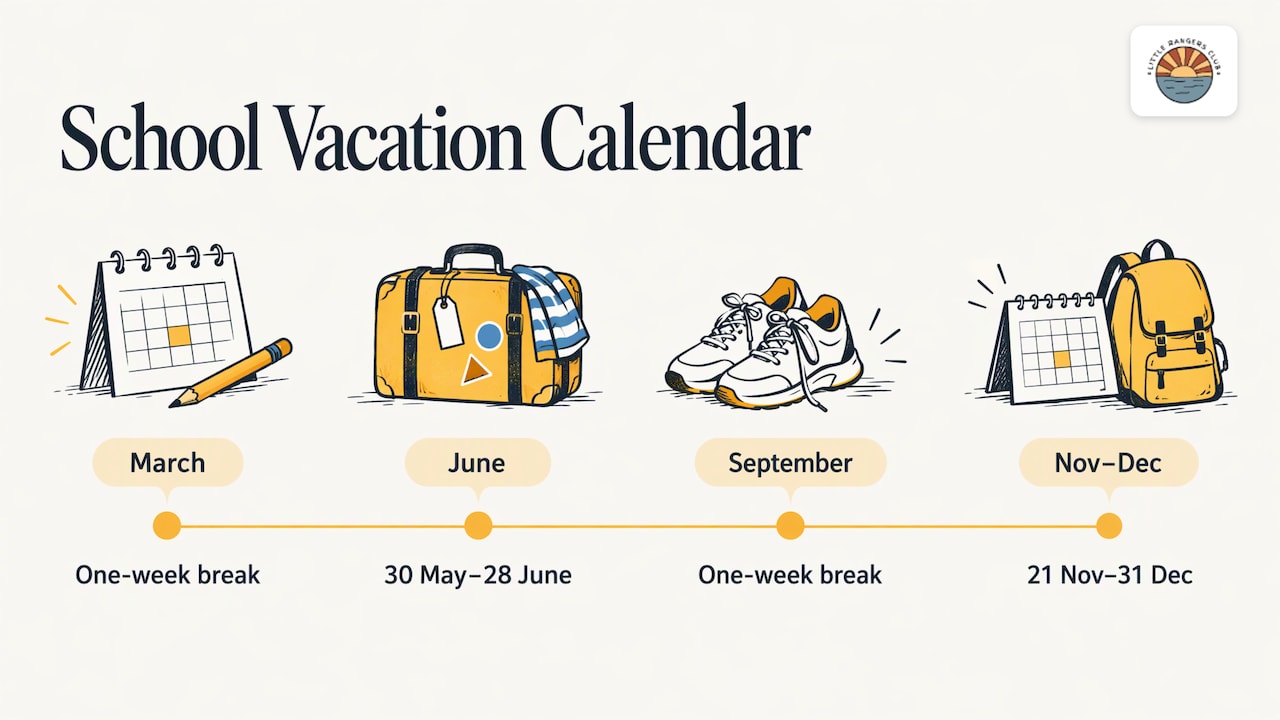
MOE’s schedule for 2026 shows four school vacations: a week in March, the June break (30 May to 28 June in 2026), a week in September, and the long year-end break from 21 November to 31 December. MOE Kindergartens follow the same dates. Many private preschools set their own calendars, so confirm with your centre.
The year-end break is about six weeks. That is too long to fill with one-off outings, and too long to leave to screens. Plan it in blocks: a themed week of camp, a quieter week, a family trip, then another themed week. Dates change each year, so check MOE’s page for the current calendar.
A weekly rhythm that works
Parents often over-plan the first week and run out of ideas by the third. A repeatable week is easier on everyone:
| Slot | What it looks like | Why it helps |
|---|---|---|
| Two mornings | Structured active session (camp, class or workshop) | Gives routine, new skills and time with other children |
| One day | Outing: museum, park, beach, library | Fresh surroundings, shared family time |
| Two days | Free play at home or in the estate | Unstructured time builds creativity and self-entertainment |
| Weekend | Family time, rest | Stops the week turning into a schedule |
The Straits Times guide makes the same point: an occasional outing and fresh experiences at home are more enjoyable for the family than a full diary. If you are weighing a regular sport as well, the checklist for choosing a youth cycling club is a useful model for the questions to ask of any recurring children’s activity: pace, supervision, group size and fit with your family’s week.
Match the activity to the child’s age
A four-year-old and a eleven-year-old need different things from the same break.
Ages 3 to 6: movement, play and first group experiences
Young children need short sessions, plenty of movement and a facilitator who keeps instructions simple. Games that build balance, throwing, catching and cooperation suit this age far better than drills. If your child is starting out, our parent’s guide to sports for 3-year-olds explains what to expect and how to pick a first class.
Ages 7 to 10: skills, teams and challenges
This is the age when children enjoy a goal: finish a course, build something that works, win a team challenge. Multi-sport programmes, building workshops and adventure games hold their attention. Children also begin to notice what they are good at, so exposure to many activities pays off.
Ages 11 to 13: independence and something new
Pre-teens often say they are bored of “kids’ stuff”. Offer something with real equipment and real responsibility: water sports, drone building and flying, or a simulator session. The Singapore 24-hour activity guide consensus statement advises children to take part in a variety of activities through the year rather than specialising early in one sport, so a break is a good time to try something different.
What children gain from a structured camp
Parents who send children to holiday camps often cite social growth first. The Straits Times reported in June 2026 that one parent uses holiday camps to push a shy child out of their comfort zone, seeing interaction with other children as just as crucial as the sport. A secondary school teacher and parent quoted in the same piece links sports camps to resilience and problem-solving.
That matches our own approach. Our programmes are built around adventure and experiential learning, so children practise teamwork, resilience and problem-solving while they are having fun, with experienced facilitators guiding each session. Our holiday camps are open to children aged 3 to 13, and our guide to multi-sport camps in Singapore explains how a multi-sport format works.
Ideas beyond sport
- Flight simulator sessions. Our 30-minute simulator experience is $55 per person and the 60-minute session is $95 per person. See what children gain from flight simulator training.
- Build-and-fly drone courses. The Basic Build & Fly Course is $60 per person and the Advance Build & Fly Course is $50 per person. Hall-of-Fame Drone Fly Sessions are $16 to $25 per person. Prices are on our pricing page, and drone skills for children covers what they learn.
- Water sports. Many children in Singapore are keen on water but not yet confident in it. Start with water sports for beginner kids and our guide to water confidence for kids.
- Nature and outdoor adventure. Our outdoor adventure camp guide covers survival-style and nature exploration formats.
Keep outdoor activities safe in Singapore’s climate
Singapore’s heat and humidity decide how outdoor time should be planned. The consensus statement on the Singapore 24-hour activity guide advises avoiding exercise in extremely hot and humid conditions, warming up and cooling down, drinking enough water and using sun and insect protection. It also advises that children with pre-existing medical conditions consult a doctor before strenuous exercise.
A few habits make this practical:
- Schedule active play for the morning or late afternoon, and move indoors at the hottest hours.
- Pack a water bottle, hat and sunscreen for every outing.
- Make helmets and pads a habit for cycling or rollerblading. HealthHub SG recommends this, along with adult or older-sibling supervision when needed.
- Check in with your child. If they feel dizzy or short of breath, they should rest, and you should seek medical advice if it continues.
- Choose activities for your child’s age and ability, and read the operator’s requirements before you go. ActiveSG Circle gives this advice and lists ideas from hiking and kayaking to water play at the children’s gardens.
We run our sessions with safety and quality instruction as a priority. Our guide to outdoor activities for kids in Singapore has more family-friendly ideas.
Free and low-cost options
A good break does not need a booking every day. The Children’s Season festival, now in its third year, features free and ticketed activities across 21 museums and institutions. Its signature programmes were priced at $20 a person in 2026. It runs around the June break, so look for the current programme before you plan.
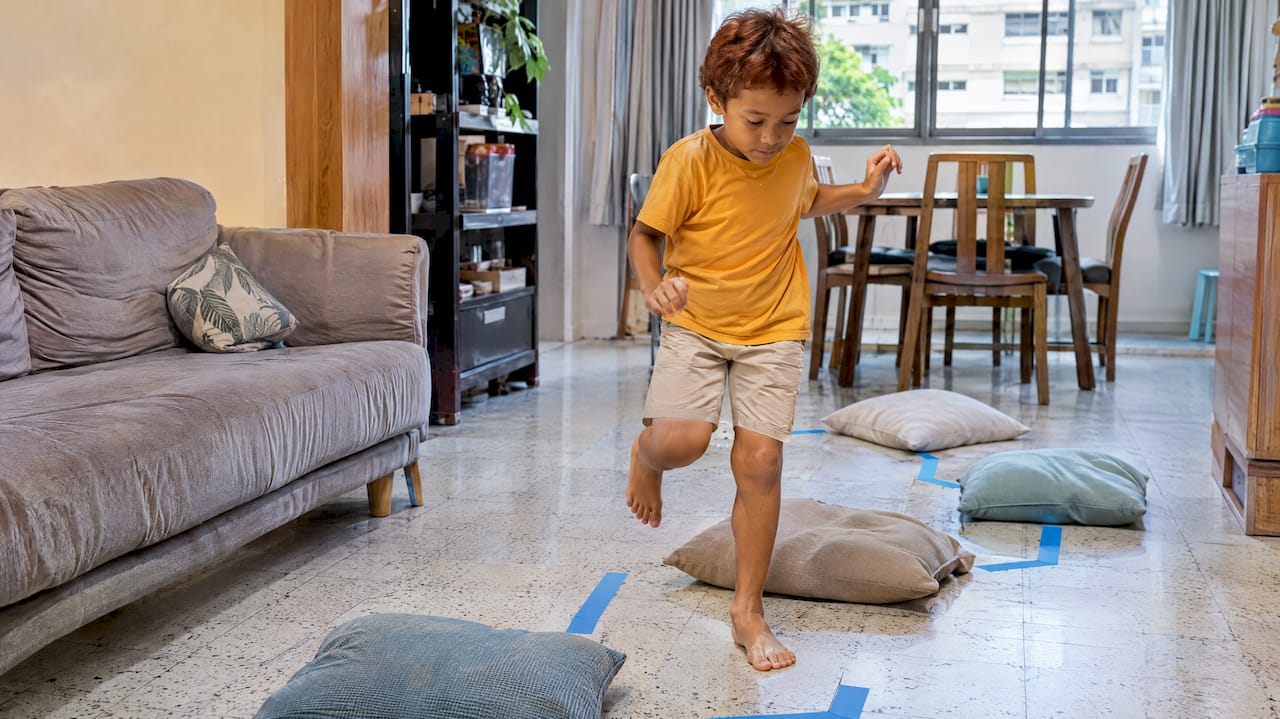
At home, a pillow-and-tape obstacle course, a themed indoor scavenger hunt or simple kitchen science all work. Little Skool-House lists five such ideas with the skills each builds. Mix these in on rest days so the paid sessions stay special.
For preschools: year-end activities that fit the curriculum
Preschools in Singapore already plan outdoor time. MOE confirms that ECDA requires preschools offering full-day services to include at least 30 minutes of outdoor activity daily, or 45 minutes three times a week, and half-day services to include gross motor activities at least three times a week, with one session outdoors. Preschools are encouraged to go beyond the minimum.
Year-end is a natural time to do that. A special-event day for K1 and K2 children, a graduation-season adventure morning or a week of themed activities gives teachers something fresh to build on. When you plan one, think about four things:
- People: enough trained adults for the group size and the children’s ages.
- Equipment: age-appropriate and checked before the session.
- Environment: a walk-through of the space beforehand for hazards.
- Process: a clear plan for the session, water, first aid and what happens if the weather turns.
These follow the PEEP model (people, equipment, environment, process) in the ECDA’s outdoor learning guide for early childhood. For schools and kindergartens, our Aviation Exposure School Programme is $105 per student. It is one way to bring a new kind of STEM-flavoured adventure to a class, and our school programmes page covers partnerships for outdoor activities.
Plan a birthday around the break
Breaks are also when many families schedule birthday parties. Our mobile party packages are conducted at home or at a local venue with professional facilitation, so you do not need to travel across the island. Published prices on our parties and events page include:
| Party | Price |
|---|---|
| Combat Skirmish Laser Tag | $360 |
| BLOOP Bubble Games | $456 |
| Water ZOVB and Water Tag Pool Party | $660 |
| Minute To Win It | $680 |
| Indoor Lego Bricks Masters | $680 |
| Laser Clay Shooting | $690 |
| Brick-A-Drone | $750 |
| Amazing Race Party Edition | $780 |
| Sailing & Wing Foil | $950 |
For older children, our school-age birthday activities ideas show how to keep a party active.
Where our programmes fit your break
If you want a regular structure through the break, our 10 Sessions Weekly Class Package is $280. It gives children a consistent weekly session with the same facilitators. For a more focused skill, Exclusive Private Classes are available, and our Little Rangers Holiday Camp brings adventure, sport and hands-on learning together for ages 3 to 13.
To see what is running, start with our holiday camps page. If you are a preschool or school, our school programmes page is the place to begin.
Our view on school breaks
Most parents we speak to want the same thing from a break: children who come back to school more confident, not more tired. We believe that comes from variety with purpose.
A child who builds a drone, balances on a board and works with a team in the same week learns that new things are manageable. That is what we design our programmes to do. Fun and education are woven together, with experienced facilitators who keep the pace right for each age group.
For preschools, we think the year-end event deserves the same care as the curriculum. A well-run outdoor adventure morning gives children a shared memory and teachers a fresh base to build on.
Keep some days empty. Rest is part of the plan, and the activities that stay with children are the ones that were chosen well, not the ones that filled the most days.
Joshua
FAQ
What can families do with children during school holidays in Singapore?
Mix one or two structured sessions a week, such as a camp or class, with an outing and some free time at home. Museums, parks, beaches and library visits cost little, and children’s festivals run around the school breaks. Our holiday camps can anchor the week.
What can children do at home when they are bored?
Try an indoor obstacle course, a themed scavenger hunt, cooking together or building with bricks. Unstructured play builds creativity, so a little boredom is fine. Keep a few ideas ready and let your child pick.
Which activities suit a 13-year-old?
Older children respond to real equipment and challenge: water sports, drone building and flying, or a flight simulator session. These give them independence and a skill to show for it. Our pricing page lists the simulator and drone options.
How many activities should I book in one break?
Leave room for rest. Two structured sessions a week with an outing and free days around them is a manageable pattern for most families. Adjust to your child’s energy and age.
Sources
- School Terms and Holidays for 2026, MOE
- Outdoor Learning in Pre-Schools and Primary Schools, MOE
- Hello fun: Your activity guide for the school holidays, The Straits Times
- Kids learning life skills at Singapore sports camps, The Straits Times
- June school holiday activities, The Straits Times
- Consensus statement on the Singapore integrated 24-hour activity guide, Annals
- Parent Hub: Grow Well SG, HealthHub
- School Holiday Activities in Singapore: Outdoor Ideas, ActiveSG Circle
- 18 Fun & Easy Indoor Activities For Kids Singapore