The best life skills activities for kids are ones they repeat, do with other children and finish on their own: packing a bag, cleaning up, taking turns, solving a problem as a team, trying something slightly hard outdoors. Home routines lay the base. Structured outdoor programmes then give children the practice with peers, with risk and with a trained adult nearby. At Little Rangers Club, we run indoor and outdoor programmes for children aged 3 to 13 across Singapore, built around exactly these skills: teamwork, resilience and problem-solving.
This guide is for parents, preschools and kindergartens in Singapore. It covers what to do, at what age, and how to keep it safe.
Key Takeaways
- Life skills are practised, not taught once: small daily tasks, repeated, build confidence and independence.
- Singapore’s Health Promotion Board recommends an “I Do, We Do, You Do” approach for younger children, so the child ends up doing the task alone.
- Outdoor and group activities add what home routines cannot: negotiation, turn-taking, managed risk and resilience.
- Match the activity to the child’s ability, set ground rules and check for hazards before you start.
- Preschools and kindergartens can bring in outdoor adventure programmes for year-end activities, and parents can choose weekly classes, camps or birthday parties.
Table of Contents
- What counts as a life skill for a child?
- Everyday tasks that build independence
- The “I Do, We Do, You Do” method
- Teamwork and problem-solving need other children
- Why the outdoors builds resilience and confidence
- Matching the activity to the child
- Year-end and outdoor activities for preschools and kindergartens
- Keeping the habit going week after week
- Life skills with Little Rangers
- Our view on life skills
- FAQ
- Sources
What counts as a life skill for a child?
The phrase sounds large, but for a child it is mostly ordinary. Montessori curricula for ages 3 to 6 sort fundamental life skills into four groups: control of movement, care of oneself, care of the environment, and grace and courtesy in dealing with others. Typical activities include spooning and pouring, washing hands, dressing, watering plants, sweeping and washing dishes. The same source says these build concentration, coordination, self-regulation and confidence.
For older children the list grows. Cooking, budgeting, gardening, making and fixing things and household admin all count as practical life skills, according to BBC Bitesize. Add the social side that matters in a Singapore classroom or CCA: cooperating, communicating, coping when something does not go to plan.
A useful way to organise all of this for a parent:
| Skill area | What it looks like | Typical age to start |
|---|---|---|
| Self-care | Dressing, shoes, hand-washing, packing a bag | 3 and up |
| Care of surroundings | Tidying up, wiping the table, watering plants | 3 and up |
| Money and planning | Meal-planning with a budget, comparing options | Older children |
| Teamwork and communication | Group games, shared challenges | 3 and up, in simple forms |
| Resilience and confidence | Trying something new outdoors, managing small risks | 3 and up, with supervision |
Everyday tasks that build independence
Start with what is already in your home. Singapore’s Nurturing Early Learners curriculum from the Ministry of Education names everyday routines as responsibility tasks: putting on one’s own shoes, flushing and hand-washing during toileting routines, and cleaning up after an activity so the child takes care of the learning environment.
Good starter tasks for ages 3 to 6:
- Pouring and spooning: a small jug and a cup at the table.
- Setting the table: one plate and one glass per person teaches counting and one-to-one matching.
- Dressing practice: buttons, zips and shoe fastenings on their own clothes.
- Plant care: watering the pot on the balcony or the corridor plant.
- Wiping and sweeping: a child-sized cloth and a small brush.
For children of 7 to 12, FamiliesforLife’s Singapore Small Steps guide suggests a Cooking Together Week where children choose the recipes, multi-room blanket forts, strategy board games, journaling and family storytelling. Each one asks the child to plan, decide and see something through.
The “I Do, We Do, You Do” method
The most common reason home routines fail is that adults either do everything or hand over everything. The Health Promotion Board’s Parenting for Wellness guide gives a clear middle path for younger children, called “I Do, We Do, You Do”.
Its own example is packing the school bag to the class timetable:
- I do: you show how to check the timetable and pack the bag.
- We do: you pack it together, and the child does the steps they can.
- You do: the child packs alone, and you affirm the effort even if it is not done exactly your way.
The guide also says children will do chores more slowly and differently at first. Step back and let them try: the trial and error is where the confidence and independence come from. For older children, it suggests involving them in family activities that build a target skill, such as giving them a budget for meal planning and letting them research options, so money management and planning get real practice.
The ECDA educators portal adds a habit that works at home and in class: guide by the side with open questions such as “What are you trying to do?” and “How can I help?” Adults do not need all the answers, and offering choices, through a simple vote or chart, helps quieter children join in with more confidence.
Teamwork and problem-solving need other children
A child can learn to pour a glass of water alone. Negotiating, turn-taking and empathy only get practised with peers. NIEC, Singapore’s early childhood institute, explains that peer play outdoors teaches negotiation, turn-taking and empathy because open space gives children the freedom to move and create together.
That is why group formats matter for this skill set. Good group activities share a few features:
- A shared goal that one child cannot reach alone, such as a relay, a build or a team mission.
- Roles that rotate, so quieter children lead sometimes and confident children follow.
- Small setbacks built in, so children have to regroup and try again.
- An adult who facilitates without solving the problem for them.
The National Parks Board’s Kids for Nature programme, run for Singapore schools, follows the same logic. Its eight-lesson outdoor programme uses group and individual activities in the school compound to develop self-awareness, social awareness, self-management, relationship management and responsible decision-making, and ends with a park excursion. Primary 1 children have a picnic, while Primary 2 children take a guided walk at Jacob Ballas Children’s Garden or HortPark.
If you want ideas to try with friends or a class, our guide to outdoor games that inspire adventure is a good place to start.
Why the outdoors builds resilience and confidence
Resilience is the ability to try, struggle, and try again. A flat, tidy living room rarely tests it. The outdoors does, gently.
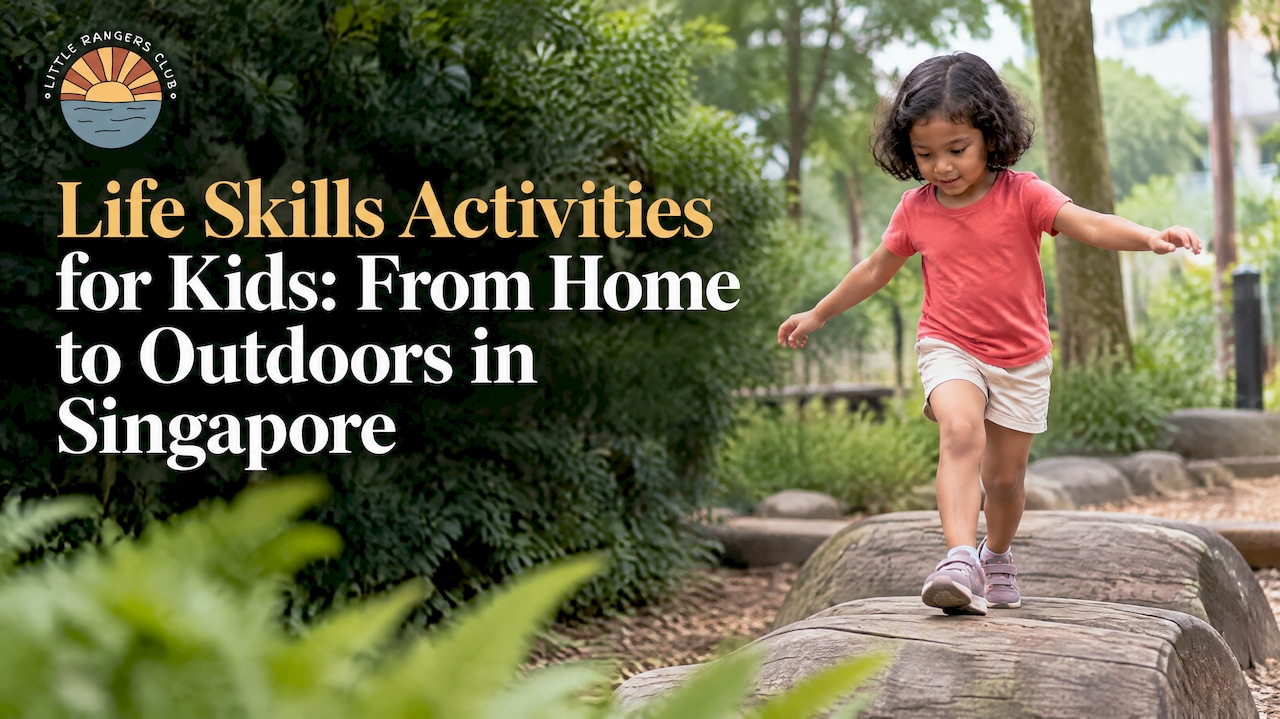
NParks’ 2025 design guidelines for nature playgardens state that appropriate risk, such as moving parts and changes in level or gradient, helps children overcome fears and feel a sense of achievement. They cite studies linking risk-taking in play to self-confidence, social skills and resilience. They also say hazards such as sharp edges, unstable structures and gaps that trap limbs should be avoided. The aim is managed challenge, not danger.
NIEC cites research that experiential outdoor learning helps children focus and supports emotional growth, and that running, climbing and balancing build motor skills in ways a classroom cannot fully replicate. It also notes that children who find it hard to sit still indoors often focus better after outdoor time.
The movement itself counts too. Singapore’s 24-hour activity guide consensus statement recommends that toddlers and preschoolers accumulate 180 minutes of physical activity daily in a safe environment, with at least 60 minutes of moderate-to-vigorous activity for preschoolers, and encourages daily outdoor play with a caregiver taking part.
Outdoor ideas close to home
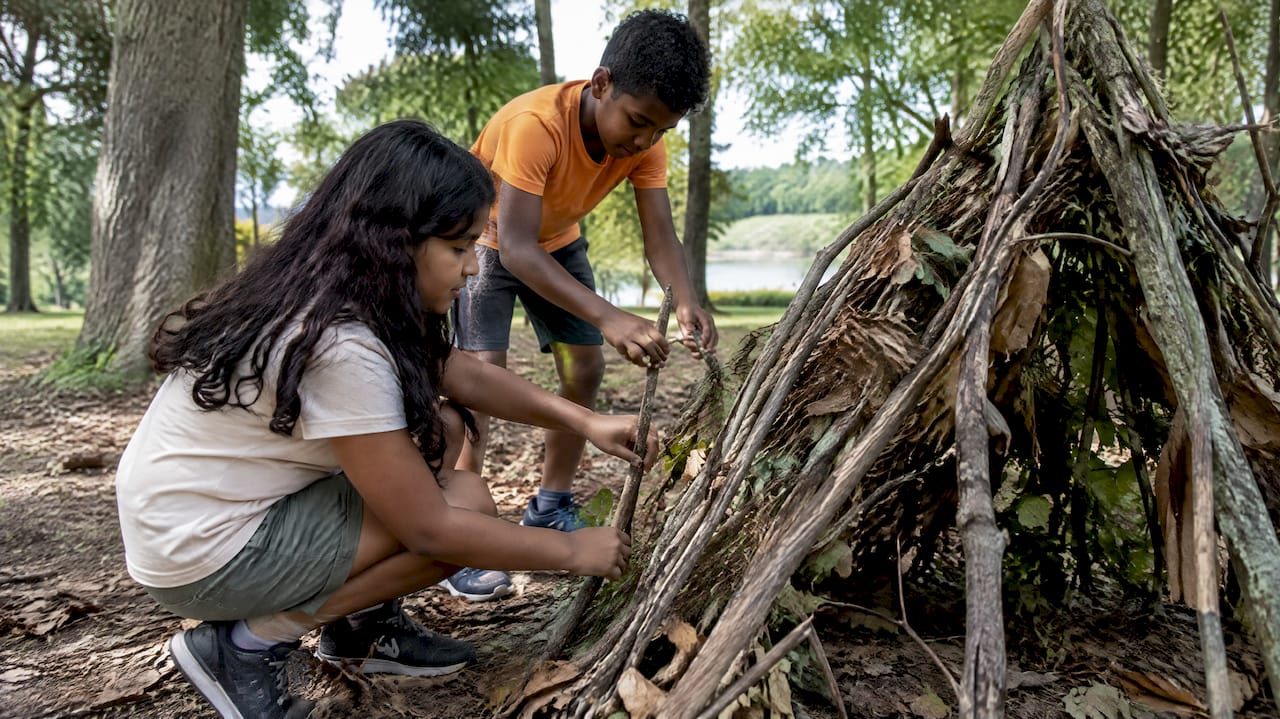
The Small Steps guide lists 20 to 45 minute outdoor activities for 7 to 12-year-olds that Singapore families can do without much planning: hiking at MacRitchie Reservoir or Bukit Timah, building forts from branches and leaves, visiting East Coast Park, the Botanic Gardens or Jurong Lake Gardens, family sports days with frisbee, cycling or badminton, a picnic challenge, and volunteering at park clean-ups. For a longer list, see our guide to outdoor activities for kids in Singapore.
On very hot or wet days, indoors works too. The Singapore 24-hour activity guide annex suggests obstacle courses from cardboard boxes, pillows and bedsheets, throw-and-catch with rolled socks, masking-tape balance lines on the floor, and playground games such as Freeze-Tag and The Floor is Lava.
If your child is very active, it also helps to look after their bodies. Parents who want to understand how gentle care suits young bodies can read about chiropractic safety for young children before a busy season of sport.
Matching the activity to the child
Every child develops differently. NIEC’s Senior Lecturer Ms Nor Jehan Mohamed Salleh advises matching the activity to each child’s ability so they feel challenged within a safe environment. A 5 to 6-year-old may explore under supervision, while babies and toddlers can take in sights and sounds from a stroller.
A practical guide by age:
- Ages 3 to 4: short, concrete tasks with an adult beside them: pouring, tidying, simple obstacle courses, ant-trail watching, scavenger hunts of leaves and sticks.
- Ages 5 to 6: two- or three-step routines done alone (pack the bag, set the table), team games with simple rules, supervised nature exploration.
- Ages 7 to 9: planning and choosing: picking a recipe, organising a family game, building something from a plan.
- Ages 10 to 13: responsibility with money, time and others: a meal budget, a team challenge with leadership roles, an outdoor skill such as navigation or water sports with a trained facilitator.
Safety comes first at every age. NIEC recommends setting ground rules, checking for hazards before play, and teaching children to manage risks themselves, for example checking whether a slide is wet after rain or spotting sharp edges. Be mindful when an environment may overwhelm a child’s ability. The Ministry of Education’s curriculum also states that children learn best when they feel safe and valued, and that attention and affirmation help them act with confidence.
Year-end and outdoor activities for preschools and kindergartens
Preschool teachers know the pattern: classroom routines build self-care, but a class of 20 or more children is hard to run through adventurous group challenges with the staff you have. That is where an outside facilitator helps, particularly for year-end events, when teachers want something memorable that is also developmental.
When choosing an outdoor or enrichment programme for a preschool or kindergarten, ask these questions:
- Does it build more than one skill? Look for teamwork, resilience and problem-solving in the same session, not just a one-off thrill.
- Is it right for the age group? Three-year-olds and six-year-olds need different pacing, rules and levels of challenge.
- Who leads it? Experienced facilitators and a clear safety routine are essential.
- Does it connect to learning? The best programmes link the activity to a skill children can name afterwards.
- Can it come to you? Programmes that work at your school or a nearby venue save travel time and parent consent paperwork.
For schools, we offer the Aviation Exposure School Programme at $105 per student, and you can ask us about other outdoor and adventure activities for students through the same page. Our guide to structured activities for children explains what to expect from a well-run session, and our article on nature versus indoor enrichment helps compare formats.
Keeping the habit going week after week
One good session is a nice memory. Skills are built by repetition, which is why the strongest approach combines three layers:
- Daily routines at home (bag, shoes, table, tidy-up) for independence.
- A weekly activity with the same group of children and a facilitator, for steady progress in teamwork and confidence.
- A bigger adventure in the holidays, such as a camp, for stretching comfort zones.
If your child resists exercise or new activities, our piece on motivating kids to exercise covers what works for Singapore parents. For holiday options, see our guide to outdoor adventure camps in Singapore.
Life skills with Little Rangers
We offer structured indoor and outdoor programmes for children aged 3 to 13, led by experienced facilitators and built around safety, quality instruction and character development through experiential learning.
Parents can choose the 10 Sessions Weekly Class Package at $280 for a regular multi-sports routine, the Little Rangers Holiday Camp for school breaks, or Exclusive Private Classes for one-to-one attention. Our mobile birthday parties, from $360 for Combat Skirmish Laser Tag, come to your home or a venue near you; see all the birthday party packages.
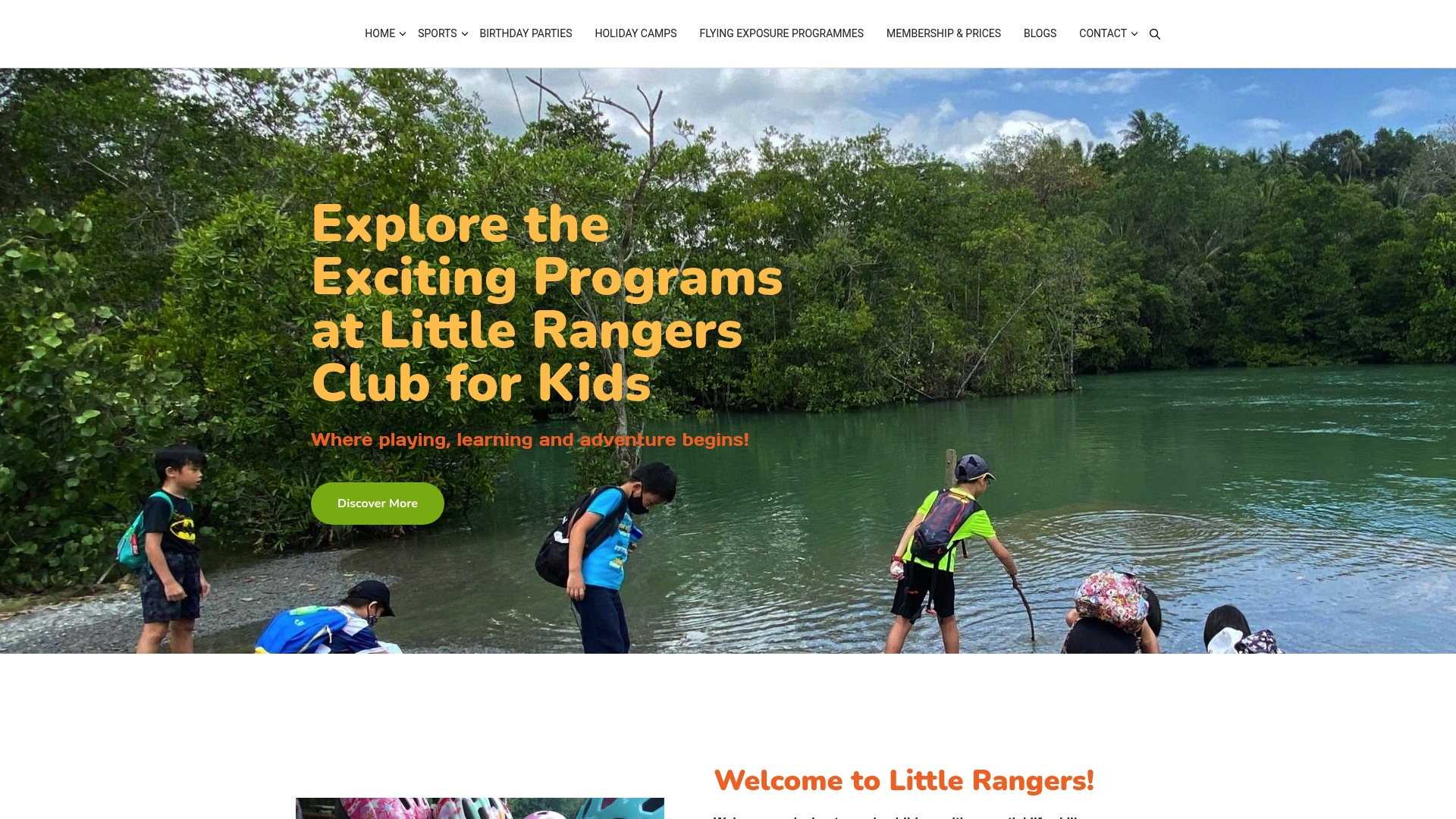
Preschools and schools can start at our school programmes page, and families who are not sure where to begin can reach us through littlerangers.sg.
Our view on life skills
Life skills are not a subject. They are what children do when something is a little hard and nobody is rescuing them straight away.
That is how we design our programmes. A multi-sports class, a holiday camp or a birthday challenge puts a child in a group, gives them a goal and lets them work through it with a facilitator beside them, not in front of them. Teamwork, resilience and problem-solving come from doing, not from being told.
We think fun and learning belong together. When children enjoy themselves, they come back, and coming back is how habits form. Our programmes cover indoor and outdoor settings, from sports and nature exploration to flight simulators, drones and water sports, so there is something for children with very different interests across ages 3 to 13.
Safety and quality instruction sit underneath everything we run. A child who feels safe is a child who is willing to try.
Joshua
FAQ
What are easy life skills activities for a 3 to 4-year-old?
Start with pouring water from a small jug, setting the table with one plate and glass per person, tidying toys into a low shelf and watering a plant. Use the “I Do, We Do, You Do” approach: show it, do it together, then let your child try alone. Praise the effort, even when the result is messy.
How do I teach responsibility without taking over?
Give your child a clear, age-appropriate task and let them do it at their own pace. The Health Promotion Board advises parents to step back and allow trial and error, because this is how confidence and independence grow. Use open questions such as “How can I help?” instead of correcting.
Are outdoor activities safe for young children?
They can be when adults prepare. Set ground rules, check the area for hazards such as wet surfaces and sharp edges, and match the activity to your child’s ability. Supervision matters most for children aged 5 to 6 who are exploring. Our programmes are run with experienced facilitators and a focus on safety.
Can a preschool arrange outdoor adventure activities for year-end?
Yes. Preschools and kindergartens can work with us on outdoor and adventure activities for their students, and we run a school programme at $105 per student for aviation exposure. Contact us through our school programmes page to discuss what suits your class size and age group.
Sources
- Parenting for Wellness: starting your child on age-appropriate tasks (Health Promotion Board)
- Fundamental Life Skills, Montessori National Curriculum (Montessori Australia)
- Teaching practical skills tips (BBC Bitesize)
- Nurturing Early Learners curriculum (Ministry of Education)
- Small Steps for children (FamiliesforLife)
- Can learning be child’s play? (ECDA Educators Portal)
- Outdoor activities to build confidence and skills (NIEC)
- Kids for Nature PAL outdoor education (NParks)
- Design Guidelines for Nature Playgardens in Singapore (NParks, 2025)
- Consensus statement on Singapore integrated 24-hour activity guide (Annals of the AMS, 2023)
- Annex 2, 24-hour activity guide home activity ideas (Annals of the AMS, 2023)